A Portrait of the Absurdist as a Young Man
- Dorothy Reno
- October 12, 2026
The Stranger fails to illuminate Camus’ courageous philosophy.
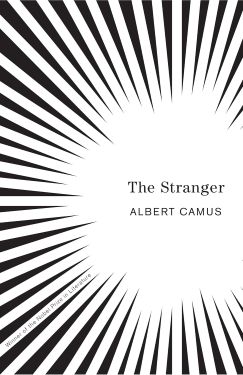
There is something about Albert Camus’ philosophical novel The Stranger that beckons multiple readings across decades. Harold Bloom did it. He wrote, “I first read The Stranger in 1948, when I was eighteen, and was strongly moved. Returning to it in 1988, I was rather disappointed; time seemed to have worn it smooth. Reading it now a third time, I find I hover between my two earlier critical impressions.”
Coming late to the party, I first read The Stranger in 2011, when I was 31. Like Bloom, I was also strongly moved — but, in my case, it was by the chilling impression that the main character, Meursault, was a psychopath. Unconfident in my literary abilities at the time, I assumed I was missing something and kept quiet. Returning to the French Spanish (and Algerian) writer’s 1942 novel in the summer of 2026, I found my initial impressions still intact.
Read it and weep: The story opens with, “Aujourd’hui, maman est morte.” (“Today, Mom died.”) This is followed by, “Or maybe it was yesterday, I do not know.” The tone of the opening lines, which sets the stage for the entire work, expresses a certain — how do you say? — je ne give a shit pas.
Traveling from Algiers to the town of Marengo for his mother’s funeral, Meursault finds his mother’s friends grieving her loss. While he wilts in the heat and wishes for the funeral to be over, his mother’s fiancé, Monsieur Pérez, is overcome trying to keep up with the funeral procession. Fighting old age and the North African sun, Pérez unhappily resorts to taking shortcuts over the terrain to accompany his lost love on her final destination. None of these details is lost on Meursault, yet nothing about Pérez’s dedication stirs any emotion in him:
“Several other images that day have stuck in my mind: for instance, Pérez’s face when he caught up with us for the last time, just outside the village. Big tears of frustration and exhaustion were streaming down his cheeks. But because of all the wrinkles, they weren’t dripping off. They spread out and ran together again, leaving a watery film over his ruined face.”
Tears of frustration and exhaustion? Not, perhaps, sorrow? Meursault responds to the aesthetics and mechanics of the scene, remaining insensate to Pérez’s poignant display. Here is a heart turned away from both the menacing shadows of grief and the trill of human connection. Meursault is lucid but shows no signs of moral discernment. Though he remains ultra-sensitive to sensation (particularly negative stimuli), his keen perceptions never rise to the level of analysis or psychological insight, let alone feeling.
He begins a romantic relationship with Marie Cardona the day after the funeral; he notices but declines to interfere when his neighbor, Salamano, beats his dog. He befriends a pimp named Raymond Sintès and writes a deceitful letter on his behalf because he has nothing better to do. When Raymond abuses a woman in his apartment, Meursault fails to intervene. Marie asks if Meursault loves her. He answers, “probably not.” Finally, during an altercation brought on by Raymond, Meursault shoots and kills a man.
He cannot say why, except that the sun was in his eyes when he pulled the trigger. Throughout the text, we see phrases like, “Cela m’était égal” (“I did not mind” — or, more harshly, “I did not care”) and “tout cela était sans importance réelle” (“none of that really mattered anyway” — or, “all of it had no meaning”).
At Meursault’s trial, the examining magistrate and the prosecutor paint him as a monster, leveraging his callousness at his mother’s funeral against him. Here is where most readers begin experiencing the dissonance of siding with the story’s antagonists over its main character.
Surely, Camus had something more subtle in mind?
Reading The Stranger for the first time, I did not realize the novel was a fictional companion to Camus’ book of philosophy entitled The Myth of Sisyphus. In this work, he outlines his central philosophical idea, the concept of the absurd:
‘“It’s absurd’ means ‘It’s impossible’ but also ‘It’s contradictory’…it is so, solely by virtue of the disproportion between his intentions and the reality he will encounter.”
The absurd is the dark hinterland between our desires and the uncaring world. At its foundations, Camus’ vision, like Tolstoy’s essays in War and Peace, is deeply suspicious of epistemology. Whether through science or religion, Camus rejects the idea of “knowing” anything we cannot experience directly. After accusing the existential philosophers of escapism and administering to them a brisk spanking, he concludes that we should embrace our despair and walk the narrow path between suicide and delusion, accepting life exactly as it is. He calls this “living without appeal.”
So that no one could accuse him of being passive, Camus added to his philosophy an element of revolt: The absurd person should pay no mind to common rules and mores; they ought to distance themselves from their own lives and take a broad perspective. And also this hair-raiser: Any attempt at meaning, which Camus slaps with the label “philosophical suicide,” should be abandoned for the sole pursuit of accumulating experiences. Here, he takes pains to emphasize that quantity matters more than quality.
Now Meursault’s character comes into focus. He is not a psychopath: He is Absurd Man. What difference does it make whether his mother died today or yesterday? Crying and collapsing at her funeral only yields energy to the indifferent universe that took her away. In Camus’ system, Meursault is winning when he feels joy because his bus “entered the nest of lights that was Algiers.” With the funeral over, he can sleep for 12 hours straight.
Likewise, making love with Marie Cardona is more important as a sensory experience than vis-à-vis the more abstract question of whether he loves her. Wishing Salamano would not beat his dog will not prevent the abuse from happening, and being friends with Raymond the pimp is as good (or bad) as being friends with anyone, especially after Raymond offers Meursault a free dinner and an afternoon at a friend’s beach house.
With this, the reader better understands the flattened world of The Stranger but is neither convinced nor satisfied. Meursault is not a psychopath, but we forgive ourselves for the mistake. His confusion during his murder trial is reminiscent of Kafka’s Josef K and evokes Dostoevsky’s trial of Dmitri Karamazov, particularly when the prosecution accuses Meursault of being guilty of everything — guilty of killing “the Arab,” guilty of killing his mother, and guilty of killing a victim in an unrelated case.
We appreciate the dramatic metaphors, even if we have seen this baroque courtroom fiction before. Meursault’s conversation with the prison chaplain should be the crowning atheistic achievement of the book; instead, Camus goes back to plagiarizing Dostoevsky, with Meursault playing the anemic Ivan Karamazov.
Personally, I take some umbrage at the thought of eschewing meaning. Nor could I wholeheartedly embrace a philosophy that would have me repudiate the effects of my limbic system. Nevertheless, The Myth of Sisyphus on its own is a rousing work of philosophy. A stoicism of the 20th century, it inspires courage and lucidity as reasonable means for getting through life, teaching us to banish expectations and sink into what is. Using Sisyphus and his boulder as the central metaphor for the absurd, Camus reinvents futility as lifeblood and invites us on a quest for mundane glories. Famously, he wrote, “One must imagine Sisyphus happy.”
Should we be obliged to read The Myth of Sisyphus to understand The Stranger? I think so. Both works instruct us to hold fast against the lynch mob and to practice radical self-acceptance in place of canned redemption. Camus was not entirely successful in bringing his philosophy to fictional life, but this does nothing to lessen its impact in our culture(s) and our literature, nor on subsequent philosophical movements.
But I have to say: Having cried my own hot tears into that inscrutable pit between wanting and having, I have found sarcasm and wry, deadpan humor more heartening than clinging to absurd scenarios. One must imagine Camus British.
You can join Dorothy in next reading The Master and Margarita, which will be the subject of her column on January 18th, 2027.