The journalist talks listicles, his doppelganger-in-name, and rampant egotism.
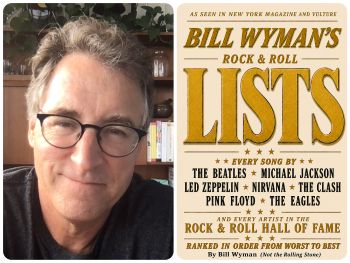
The Top 10 Things You Should Know about Bill Wyman (according to this interviewer):
1. His new book, Bill Wyman’s Rock & Roll Lists, all 904 pages of it, consists of rankings of every song by a select group of artists, including the Beatles, Pink Floyd, Led Zeppelin, Michael Jackson, and the Clash. Along the way, he delves — at extravagant length — into the histories of the bands and the world they evolved in, dispensing a lot of tart opinions in the process.
2. There’s also a long list ranking and commenting on the more than 250 artists in the Rock & Roll Hall of Fame — with some very sharp assessments down at the bottom. (Poor Lionel Richie!)
3. Most of the takes were written for New York Magazine or its Vulture website. His rankings of Nirvana and the Eagles, however, are new.
4. Wyman is a longtime journalist. He was a well-known columnist and radio host in Chicago; he was later arts editor of Salon and then assistant managing editor of NPR in Washington, DC. He’s been published in the New York Times, the New Yorker, Slate, Rolling Stone, and many other places.
5. He was once sent a cease-and-desist letter by a certain famous bass player with whom he shares a name — ordering him not to use that name anymore!
6. The letter became worldwide news, but the matter went away when he pointed out that the bassist in question had changed his name after Wyman the journalist was born.
7. When he moved to San Francisco to be arts editor of the SF Weekly, Wyman shared an apartment with cultural commentator Sarah Vowell.
8. In 2010, he wrote a long assessment of Keith Richards’ autobiography in the voice of Mick Jagger. Many readers didn’t get that the piece was tongue-in-cheek, and the review went viral internationally.
9. In 2013, he contributed an op-ed piece to the New York Times arguing that Bob Dylan was long overdue for a Nobel Prize in literature.
10. He once told this interviewer that the first dance at her wedding, Elvis Costello’s “I’ll Wear It Proudly,” was not entirely a love song, as she thought, but also a meditation on Costello’s complex feelings about stardom.
The top 5 reasons for writing this book?
5. I can’t be the only one who thinks that the listicle, which started clogging up the internet in the 2000s, became a real menace. The lists started originally as sort of a form of press criticism — what if a listicle was 10,000 words long?
4. I don’t like how too much journalism has become shorter and more superficial. Readers are still smart and curious! Why not try to write traditional, long, in-depth criticism but frame it in a way that was fun to read, that slowly revealed deeper themes, and that maybe even ginned up a little drama as the story unfolded?
3. There’s a depressing trend in music criticism: Everything is positive. Negative reviews don’t exist anymore. Criticism is supposed to encourage people to think and spark debate. I mean, look at reviews of every new Rolling Stones album — it’s always their “best album since Some Girls!” So, in my lists, you’ve got some tough but hopefully smart opinions all over the spectrum.
2. Rampant egotism.
1. One sputtering response I get from some indignant readers is along the lines of, “But…but…these are just your opinions!” I automatically respond, “Hey — the numbers don’t lie!” That confuses them for a moment. Of course these are my opinions. Read them, consider them, agree or disagree — and write your own list if you want. The important thing is to engage and think about the music.
Its top 5 most controversial rankings?
5. When the Beatles list was first published, the beautiful John Lennon ballad “In My Life” was something of an afterthought. Folks howled, and I think they were right. It’s much higher now.
4. The Eagles overall; I’m very conscious of the resentful sexism and sometimes-misogynistic lyrics that characterize even the band’s nicest-sounding songs.
3. Pink Floyd fans don’t like my take on the band’s early and highly self-indulgent progressive-rock excursions.
2. Queen is a band I find both silly and unlistenable, and I can’t forget that, long ago, they played in Sun City in violation of the international cultural boycott of the apartheid regime of South Africa.
1. But the most controversial judgment is definitely putting “Good Day Sunshine” as the worst Beatles song. Some friends and other critics have been haranguing me about this since [that list] was originally published 10 years ago!
The top 3 criteria for choosing the subjects of your lists?
3. The band needs to have a manageable canon. Springsteen, the Stones, Dylan — these are oeuvres that are just too much of a lift.
2. I have to care, deeply, in some way. There are certain artists I just don’t connect with enough to have an opinion about anything other than their handful of best songs.
1. Definitely number one: I need a band that has drama, battles, tragedy, pratfalls, ups and downs, and legal and aesthetic outrages. I have shelf after shelf of old biographies that have all the true dirt, a lot of it not on the internet. Bands like R.E.M., say, or U2 have just conducted themselves with too much integrity to be fun to write about in the same way.
Cathy Alter is a member of the Independent’s board of directors and the author, most recently, of CRUSH: Writers Reflect on Love, Longing, and the Power of Their First Celebrity Crush.