The longtime Philly music guru puts it all down on paper.
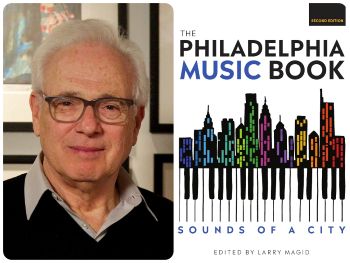
Larry Magid’s reputation in Philadelphia music circles stands higher than the William Penn statue atop city hall. Co-founder of the legendary performance venue Electric Factory and the Electric Factory Concerts promotion company, co-producer of Live Aid and Live 8, and founder of the Philadelphia Music Alliance, Magid is well known and highly regarded. Now, the 83-year-old impresario can add another title to his illustrious résumé: book editor. The Philadelphia Music Book: Sounds of a City is a sprawling, encyclopedic collection that covers every aspect of Philly’s musical heritage, and its expanded second edition makes it the definitive testament of the City of Brotherly Love’s sonic legacy.
How long did it take to put together The Philadelphia Music Book?
It’s taken four years to put it together. Four years on a book is enough!
You’ve assembled some of the finest Philadelphia music writers to contribute to the book. How did you select which writers you wanted to participate in this project?
It came from my experience and my career of knowing different writers and the expertise that these writers had with the certain musical genres that they wrote on.
The first edition covered virtually every facet of the city’s musical heritage. Why did you feel it was necessary to expand it?
Well, obviously [my contributors and I] found more people that were deserving to be in it. We found more artists in every genre that belonged in the book, and the writers that we hired brought many of these acts to our attention. We had the opportunity to do an expanded version, and that’s what [came out]. I’m sure that we’re going to hear about people that we should have included, this one or that one, but we did the best we could.
What distinguishes the music of Philadelphia?
You could say that the Philadelphia Sound is akin to the Motown Sound or the Nashville Sound, but I think what the book shows is that it’s not singular in nature with a certain musical genre — it’s spread out across all genres, and the influence from the city is, I believe, one of the great accomplishments of the city. The book shows Philadelphia’s rich musical history and the influence that these artists have had not only on the rest of the country but also internationally, as well. I don’t think that it’s just one genre — the width of the music coverage is, to me, the most impressive aspect of the book.
How did you go about creating a book that’s so in-depth?
The reliance was really on the writers’ knowledge. Of course, I had a knowledge of some of the musical genres, and that certainly helped — I knew a lot of it and lived through a lot of it. We also did a lot of research and found additional people that should be included, and I assigned bios on them to the various writers. There was also a lot of editing — not every artist or group held the same stature as others in the book. I mean, we could’ve gone on and on. I think that we got the most out of it as was possible with the amount of pages that we had to work with. It could have been the size of a phone book. We included people that we thought had the most success and the most influence in their respective genre.
Your contributions to the Philly music scene are legendary. Are there any particular milestones in your career that stand out?
That’s really difficult to say. I think that the amount of time and the number of decades that I and my partners were a presence in the music business, in presenting shows — I think that lasting influence would be it.
What music did you grow up listening to in West Philadelphia?
Well, I was a rock ‘n’ roll guy, a doo-wop guy, but I was also a fan of jazz and what we would call today classic country of the 1950s and 1960s. So I would say I had a pretty rounded concept about music. Sure, there were favorites, but they spread out over a lot of genres. Philadelphia acts were very important to me because I had such great pride in Philadelphia and the Philadelphia music scene. When I started my business as a concert promoter while a college student, I got to book such Philly acts as Lee Andrews & the Hearts, the Tymes, and Len Barry of the Dovells for various shows. First of all, they were accessible to me, but also it helped them keep going in between records.
The book is very important to me. I’m very proud to live in this city that has so many great artists and so many legendary performers that have made such important contributions. It was exciting to live through that period, but it was just as exciting to put this book together.
The late record producer Phil Spector once said that there was nothing like Philadelphia in the late 1950s and early 1960s.
Absolutely correct. It was very fertile ground At that time, it had a magic and was part of the original rock ‘n’ roll history. And Philadelphia did have a sound of its own — all of the city’s doo-wop groups had a distinctive quality and added a lot to the culture of the times.
[Photo by Tom Case/Felt Hammer.]
Frank Halperin is a freelance writer based in South Jersey.