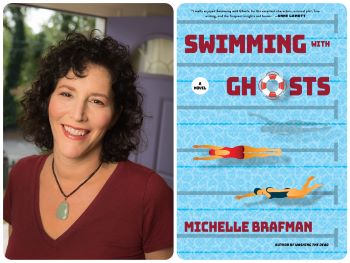
The novelist talks addiction, comas, and a narrative-steering Bible story.
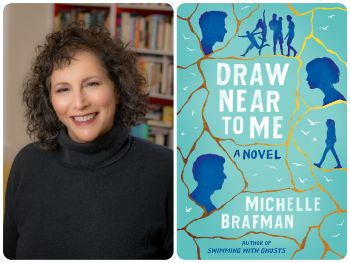
While Michelle Brafman’s Swimming with Ghosts explored the inner workings of a Northern Virginia swim club, her new novel, Draw Near to Me — the second in what her publisher nicknamed “the swan dive series” — explores the lives of the club’s members outside of the local pool. As with the previous book, this is a story about addiction (in all its forms) and about marriages both strong and strained. There’s also a main character’s coma to consider. And children on the edge of adulthood. Potent ingredients for a delicious summer page-turner.
As both a competitive swimmer and swim-team mom, Brafman knows whereof she writes. Her characters truly feel like neighborhood friends — if you happen to live in Peyton Place, that is.
Draw Near to Me is both a standalone book and a continued narrative featuring some of the characters from your last book, Swimming with Ghosts. Did you just miss those characters too much, or did you feel that the families had some unfinished business?
I was satisfied with the way Swimming with Ghosts ended and had no intention of writing a companion. After the novel came out, though, I started visiting book groups where readers inquired about the emotional and physical whereabouts of my characters. Once I started pondering their lives, I couldn’t stop. I had the most fun writing the characters who had not narrated Swimming with Ghosts, and I think delving into more members of this ecosystem deepened the book.
The topic of addiction appears in both novels. Can you give an example of how addictions run through your novel’s family?
I’ve heard addiction referred to as a family disease, one that can ripple through generations, cropping up when the emotional waters run high. In both novels, several descendants of Sebastian Norton, the alcoholic patriarch, confront a tremendous amount of upheaval, and despite years of recovery, they struggle to stay sober. In Draw Near to Me, Patrick, one of the narrators, has finally found love. Immediately after he proposes to his girlfriend, he is called to respond to a family emergency. The combination of the emotional heft of potentially losing his sibling, taking on caregiving, and chasing a sponsor who has lost his sobriety makes him want to reach for the bottle. If he succumbs to the bottle of whiskey he’s hidden in his trunk, he stands to lose the relationships that matter to him the most.
You mentioned to me a while back that the title of this book comes from a Bible story. Is it one you knew before writing your novel? And how does your title relate to the general theme of the book?
The title comes from the story of Joseph (of the “technicolor dreamcoat” for those Webber and Rice fans). Before writing the book, I knew the bones of the story: that Joseph’s brothers threw him in a ditch and sold him to a slave trader and then later came to him for food during a famine that he had predicted. I didn’t know that instead of turning them away, Joseph said, “Draw near to me.” When I heard this phrase during my rabbi’s sermon, I felt that Joan Didion shimmer and knew that I’d discovered the beating heart of my novel. Over time, these words evolved into the central question for each main character: “What would it take to draw someone near when you had every good reason to push them away?”
You do a lot of research before you sit down to write. One of your characters spends a lot of the book in a coma — what did you learn about the consciousness of coma patients?
I relied on a brilliant, seasoned medical professional to consult on the coma and corresponding physical challenges. We first met to discuss the injuries featured in the novel, but then our conversations veered toward this character’s level of consciousness and, in turn, to the spiritual realm of Draw Near to Me, maybe its soul. How lucky was I to find someone who could engage on varying levels? She posed questions I hadn’t thought to ask, and we grappled with them together.
My favorite character is the book’s amazing empath, Michael. Is he based on someone you know?
Michael, a hospital rabbi chaplain, was definitely a character who emerged from the conversations I just mentioned. I loved writing his character! I drew pieces of him from my friend and other people I know: his mesmerizing voice, knack for showing up at the exact moment he’s needed, and gift for spreading calm. Parts of Michael also materialized as I got to know him.
As long as we’re talking about favorites…my favorite type of narrative structure is the one you used: giving characters alternating chapters so that everyone has a chance to “star” in the story. How did you know when it was time to give each character their chance to speak?
Looking at a conflict from multiple points of view stretches me as a human because it forces me to ponder the stakes for every party involved and to see the grey. Regarding structure and scene, I’m debating whether or not to divulge my guilty pleasure, but here goes. I’ve been watching “The Young and the Restless” for literally decades. The good people of Genoa City and their Sisyphean lives (Victor and Nikki, you will always go back to each other) loosen my stress-release valve after a hard day.
And yet, such shows survive because of their ability to hook the viewer. But how? I suspect that, over time, I’ve internalized the rhythm of a single scene as well as when it’s time to move on to the next one. Of course, I’ve learned similar lessons from novels: Harmony by Carolyn Parkhurst, When the Emperor Was Divine by Julie Otsuka, This Is Not About Us by Allegra Goodman, and the list goes on.
[Photo by Sam Kittner.]
Cathy Alter is a member of the Independent’s board of directors and the author, most recently, of CRUSH: Writers Reflect on Love, Longing, and the Power of Their First Celebrity Crush.