How to build a life — and bridges — through poetry.
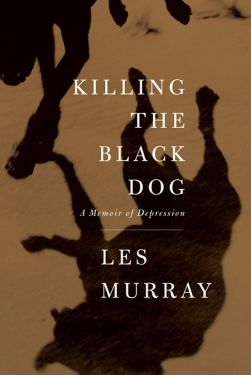
For many years, I’ve taught Les Murray’s Killing the Black Dog: A Memoir of Depression, a text that both has a prose account of Murray’s intense wrestling with depression and a number of poems that engage with that same experience. During one moment in the prose, Murray explains that when he was at his lowest, he often returned to his essential discipline, poetry, because, as he writes, “It was what I’d bet my life on.”
I, too, in big ways and small gestures, have bet my life on poetry. The main source of my income comes from teaching it, a job I was able to obtain from years of writing it, studying it, and being in community with those who respect it. Other than my early dreams of wanting to be an actor, no other pursuit or art form has occupied my imagination or my actions as much as writing and reading poetry.
My brother, a girls’ varsity basketball coach in Oklahoma, is often asked by players and parents, “What does one need to do to earn a college basketball scholarship?” His response, which often reframes the premise a bit, goes something like this:
“Can you put in the work, getting up early to shoot shots when others are sleeping, supporting your team by playing dogged defense, approaching each drill and practice with your whole self? Can you do all of that without knowing how the end result is going to turn out? Can you ask yourself, if I expend all this effort and don’t get a scholarship, will I hate basketball or still love it? Can you answer honestly?”
Those questions, I think, are deeply analogous to the questions poets might ask themselves as they decide where — and with whom, and by what methods — to pursue a career as a poet. And I do mean as a poet, rather than as a multi-genre writer, which I have nothing against but recognize as a pathway that provides a bit more certitude (though, perhaps, only marginally so).
Being a poet is hard. Murray writes in Killing the Black Dog that “not only does poetry require discipline, it is a discipline,” and so to bet one’s life on it requires an acceptance, almost a penitence, for how writing poems will shape and reshape one’s inner life and external behavior.
If that sounds therapeutic, many poets will attest to how writing poems helps them process experience into clarifying artifact — not unlike sea glass, polished by sand and waves. But many will also admit to the sharp difference between something being therapeutic and actual mental-health treatment. Poems are not a replacement for the latter. Poems can’t kill the Black Dog, Winston Churchill’s metaphor for depression, but they can help us understand our mercurial, wondrous selves and how we relate to one another and the world.
To bet on poems is to play with existential house money, only to look up and see that the casino is empty. Solitude, after all, is a currency of sorts, though few can afford it. But it isn’t the only way we lay our stakes down. The casino may be empty while we are writing, and then bustling — and, these days, hopefully smoke-free — with many others when we are reading.
James Baldwin said, “You go through life for a long time thinking, No one has ever suffered the way I’ve suffered, my God, my God. And then you realize — You read something or you hear something, and you realize that your suffering does not isolate you; your suffering is your bridge.”
That is the discipline of poetry; that is the hope we bet on when we write. We hope to build a bridge, as Lucille Clifton wrote, “between starshine and clay.”
Steven Leyva’s latest poetry collection is The Opposite of Cruelty.