Books are an essential part of her enduring legacy.
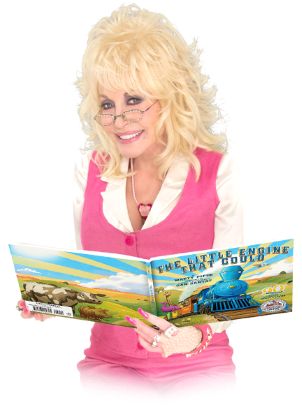
I saw her in person once. It was Tennessee night at National Harbor, just outside Washington, DC, and I was working on an economic-development story for the New York Times. Dolly wasn’t part of my piece, but she kicked off the program in all her star-spangled-and-rhinestone-covered glory.
How could I not watch and marvel at the decked out little woman from Eastern Tennessee? Entertainer aside, she was a big promoter of books, giving away 332 million to 2.2 million kids as part of her Imagination Library, which she founded as a tribute to her father, who never learned to read.
Lately, I’ve been reading Being Red by Howard Fast. In the memoir, Fast — the grandfather of political commentator Molly Jong-Fast — recalls his life as a novelist, a magazine writer, and, for 12 years, a member of the Communist Party who went to prison rather than divulge the names of party members and others to the House Un-American Activities Committee.
But Fast was also once a war correspondent on a fraught flight in North Africa, when an engine caught fire, and only a small blue bulb illuminated the cargo plane’s interior. And there sat a young serviceman reading a book by this dim light. He was a poor kid from East Tennessee who grew up having never read a book. Now, even in wartime, or especially in wartime, he was devouring the small, paperback Armed Services Editions published and made available to troops.
As Fast recalled:
I pressed him to tell me what there was about the book that had impressed him so, what kept him reading even when the engine caught on fire. “It’s a book,” he said, a statement he repeated again and again…[He] had been born and educated in the hill country of Tennessee. Drafted right after high school, he had been trained by the air force as a navigator. Before he had encountered the Armed Services Editions, he had never read a book. Comic books, school texts, but never a novel. Now he had discovered the novel, and he lived for nothing else.
In his present existence, there was a war and an air force, and neither was of any importance to him. Books were important; books were his life; and he existed from book to book, living in each new world that opened to him.
Dolly Parton was, among many other things, a lover of books, which she gave away to children who, like that aviator, had perhaps never read one. Also born and raised poor in Appalachian Tennessee, she believed that books opened new worlds to readers. This, along with her music, will be her enduring legacy.
“My, how time flies,” she wrote in her final message to every Imagination Library graduate when they completed the program. “It seems it was only yesterday when your family and friends read you your first story. You were just a baby. Now you’re five years old and about to go to school. How exciting!
“This may be your last book from my Imagination Library but you have to promise me you will keep on reading. If you go to your local public library you will find a great number of books just for kids your age. Every book is a treasure and every time you open one up you will meet new friends and take wonderful journeys to magical places.”
Dolly Parton, R.I.P.
[Editor’s note: A version of this essay first appeared on Eugene L. Meyer’s website.]
Eugene L. Meyer, a member of the board of the Independent, is a journalist and author of, among other books, Five for Freedom: The African American Soldiers in John Brown’s Army. He is currently writing a biography of his musical polymath cousin, André Previn, and has been featured in the Biographers International Organization’s podcast series.