Why we launched a “journazine.”
Most stories about science writing read like obituaries: Funding has been cut, reporters and researchers fired, entire publications shut down.
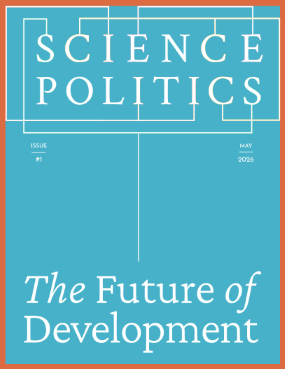
But this story is more like a birth announcement. In January 2026, an anthropology professor at Georgetown, a public-health researcher, a nuclear-energy specialist, and a journalist launched a new publication called Science Politics.
We founded it for a similar reason a group of writers and editors founded the Washington Independent Review of Books: We were concerned by the disappearance of science reporting in news media and frustrated that it was so hard for people with scientific knowledge to share their findings — not only with the public but with policymakers who could take action on their research and insights.
The notion of “science politics” also channeled a topic many people were already talking about anyway: how science and technology are intersecting with this historical moment, when so much about our country’s governance and culture is changing.
Like a lot of publications just starting out, ours didn’t have many resources beyond enthusiasm, goodwill, and a willingness to experiment. Yet those assets turned out to be enough to garner submissions from leading academics and journalists with insights into energy, health, the environment, AI, and other fields.
Since then — less than a year! — Science Politics has worked with more than 100 contributors from nearly 100 academic, nonprofit, and governmental institutions; published more than 115 articles; and engaged more than 22,000 online readers. With the help of Georgetown University students, we maintain a website, social-media channels, and a weekly email newsletter. In May, we published our first print issue, reflecting on the 2025 USAID stop-work order and considering the future of development.
The publication’s swift success has been gratifying, of course, but also edifying. One takeaway is how eager both contributors and readers are to engage in conversations about the intersection of science and politics. Although those topics are conceptually intertwined, they are often kept separate in formal discourse. Many academically oriented outlets resist commenting on policy, ethics, or values; political speech rarely examines the insights or nuance of research.
Creating a space to speak frankly about both — to invite researchers to share their opinions, and to encourage policymakers to explain the science behind their positions — has proven to be an effective formula.
A second takeaway is how important it is to insist on a forward-looking approach, even if — especially if — so much of the way we used to work and live has been upended and the loss of those systems and security is hard.
To counter the despair, we took inspiration from the Solutions Journalism Network. The organization seeks to re-orient news away from only describing and analyzing problems; it encourages writers to articulate the issue while focusing on what is already being done or could be done to address it. For example, a solutions-oriented story could offer an alternative framework; analyze a case study by addressing both its strengths and limitations; compare solutions; or simply imagine what might be done while acknowledging the conditions as they are.
When we solicit or edit stories at Science Politics, we try to keep the spirit of solutions journalism in mind. Our intention is to build civic trust by cultivating conversation rather than polarization and by fostering shared decision-making about the future rather than hand-wringing about the past.
Still, operating what is essentially a nonprofit scholarly magazine remains financially and logistically challenging. As readers of the Independent know, support for original, creative ideas isn’t easy to come by, no matter how valuable and worthwhile the enterprise is.
Yet the depth and breadth of engagement with Science Politics, despite its shoestring budget, speaks to how eager people are to come together and create something new. In this time of transformation, it’s exciting to be a scientist, a scholar, a policymaker, a writer, a person.
Kelly J. Kelly and Emily Mendenhall are executive editor and editor-in-chief, respectively, of Science Politics.