I’ve Looked at Books from Both Sides Now
- Ellen Prentiss Campbell
- March 18, 2026
Reflections on reading and reviewing.
Stephen Sondheim’s musical tragedy “Passion” includes a fierce aria to reading. Imprisoned by illness, Fosca sings: “I read to dream/I read to live/In other people’s lives…I read to live/to get away from life!”
Fosca suffers, but she can read. Sadly, learning to read remains a privilege. Books can be burned. Books can be banned (as I write, there is a book-banning bill pending in the House). Librarians have become first responders. Nevertheless, in desperate as well as more ordinary circumstances, readers with access to books will read.
One of the fortunate, I select books according to need or inclination — sometimes reading, like Fosca, to dream, to live in other people’s lives, to get away from my own. I also read to be surprised, discomfited, inspired, comforted. I read for discovery, distraction, entertainment, exploration. To connect. To try to understand. I’m not Fosca, but reading is necessary to me. Omnivorous reading: news, nonfiction, poetry, fiction.
Before reading, I must find my glasses, either the readers or the trifocals (a lens for every occasion). But the experience of reading transcends ocular mechanics. I read through different internal lenses, too, sometimes shifting focus within the course of a page.
The first perspective is simply reading; this lens, at its best, is reading like a child absorbed in the dream of a story. Rare magic.
Reading as a writer requires changing lenses, adjusting speed and focus to tease out how the work, or an aspect of it, was crafted. Intrigued by style, arc of plot, or creation of character; trying to see how the magic was made. “Split the Lark — and you’ll find the Music,” said Emily Dickinson. Is she for or against or intentionally unclear? I don’t know but never want to kill writing by dissecting it.
There’s another lens for reading: as a reviewer. Twenty years ago, I studied at the Bennington Writing Seminars. “Read 100 books, write one” was its motto and curriculum. We worked on our manuscripts and wrote “annotations” (mini essays) about books on individual reading lists. A natural, useful approach. Reading and writing are reciprocal processes.
After grad school, I continued writing and publishing stories, working on my first novel, exchanging manuscripts. But I missed writing about what I was reading. Around this time, my hometown paper, the Washington Post, shut down its standalone review section, Book World.
My husband, reading a professional journal, noticed a local attorney and author, David O. Stewart, among those who’d responded to the loss of Book World by founding a nonprofit book review: the Washington Independent Review of Books. “It’s new,” my husband said. “They’ll need people. You should look into this.”
I did. And here I still am 15 years later, grateful for the Independent, thankful it’s still here. Book World was briefly revived a couple years ago, but last month, in the latest gutting at the Post, book coverage was eliminated altogether. Staff, including the consummate reviewer and interviewer Ron Charles, was fired. (But not silenced! Thanks, Substack.)
The only constant is, indeed, change; the internet brings constant change to the world of writing and publishing. Despite dire predictions, physical books have not died out. Nevertheless, paper galleys of new books were standard when I started reviewing; today, e-galleys are the default.
But I still request (and usually receive) paper copies. Why? Even wearing screen-friendly spectacles, the eyes tire. It’s easy to lose track of an invisible book but not a tottering Jenga tower of actual ones. Besides, it’s fun to receive a new book in the mail; for this dinosaur, it’s the best thing since the Scholastic Book Fair.
A review copy is a gift, but with strings of responsibility attached. Reviewing provides an opportunity to give back to the community of readers and authors. Reading a not-yet-published book, especially a debut, is like stepping on fresh snow: It requires care. A fast reader but a slow writer, I do fewer reviews while writing my own novels. But during that long haul, I appreciate the break an assigned review provides: a project with an immediate deadline.
So, first, I read (with a No. 2 pencil in hand). Next, I re-read — passages, sometimes the entire book. Almost ready, I pull out a manila folder labeled “Reviewing Guidelines.” It contains requirements from different outlets and quotations on scraps of paper soft as flannel. I’m a magpie reader, clipping and saving for my informal Reader’s Commonplace Book.
Here’s John Updike: “Try to understand what the author wished to do, and do not blame him for not achieving what he did not attempt.” (The attribution is missing, but it’s likely from his 1975 collection, Picked-Up Pieces.)
And art critic Peter Schjeldahl: “I have a trick for doing justice to an uncongenial work: ‘What would I like about this if I liked it?’” (The New Yorker, December 23, 2019.)
Finally, Eudora Welty: “Reader and writer, we wish each other well. Don’t we want and don’t we understand the same thing? A story of beauty and passion, some fresh approximation of human truth.” (The Eye of the Story, 1977)
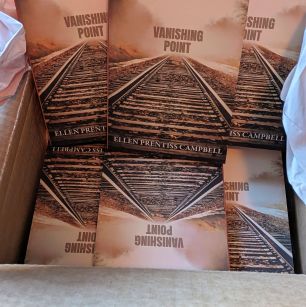
Braced by such shots of inspiration, I strive to respond to the work with honesty and fairness and to balance respect for the author’s effort and intent with the reviewer’s primary responsibility to the book’s potential audience. That delicate, necessary balance is top of mind right now as I’ve just received advance copies of my own forthcoming novel. Soon, I hope to be once again on the other side of the reviewing process.
Back in the BSE (Before Streaming Era), my family lived close to a neighborhood cinema showing “second-run movies.” The price ($2, cash only) was right for new parents with a babysitter meter running. A sign at the ticket booth warned:
“Movies are Art. Art is Subjective Preference. No Refunds.”
That’s true of books, too. The book reads the reader. Each reader, each reviewer, will have an individual response. Books are art; subjective preference rules. No refunds.
Ellen Prentiss Campbell’s collection of love stories is Known By Heart. Her collection Contents Under Pressure was nominated for the National Book Award; her novel The Bowl with Gold Seams won the Indy Excellence Award for Historical Fiction. Frieda’s Song was a finalist for the Next Generation Indie Book Award, Historical Fiction. Blogging as “Girl Writing” in the Independent bi-monthly, she lives in Washington, DC. For many years, Ellen practiced psychotherapy. Her new novel, Vanishing Point, will appear in spring 2026.