Heading into the New Year with hope and purpose.
Maybe it’s just that I sat down to start this column on the day we switched back to Standard Time, but it’s been difficult to come up with much good about the year that’s coming to a close. (The metaphor of impending darkness works on multiple levels.)
Living in the shadow of ever-encroaching fascism is paralyzing. I remember reading about oppressive regimes in high school and wondering, naively, why “ordinary citizens” didn’t do more to resist and remedy what was so clearly a dangerous situation. How could they simply stand by and watch?
I’m older now and living through times more similar to that history than I would’ve believed possible back then. I understand more clearly now that a failure to act doesn’t necessarily signal indifference but rather a complex amalgamation of fear, confusion, rage, and stunned disbelief.
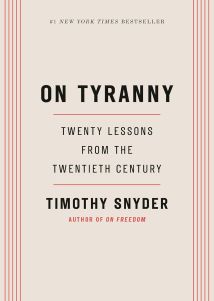
Yet, precisely because we’ve been here (or someplace like it) before, there are roadmaps. Although it doesn’t correlate perfectly, I found Timothy Snyder’s On Tyranny: Twenty Lessons from the Twentieth Century to be especially illuminating and useful.
Snyder’s exhortation to “not obey in advance” because “anticipatory obedience is a political tragedy” hit me hard. It can be difficult to break this habit because we’re conditioned to live in a society with rules and guidelines marketed as being “for the greater good.” But whose greater good — ordinary citizens or corporations and billionaires?
As my mom works at the Kennedy Center, the author’s call to “defend institutions” also struck a chord. “Sometimes institutions are deprived of vitality and function,” he notes, “turned into a simulacrum of what they once were, so that they gird the new order rather than resisting it.”
It’s been painful to watch that happen to a once-beloved entertainment venue, where, during her September 18th performance, Black musician Yasmin Williams says she was “heckled by an organized group of Log Cabin Republicans” — a group that, according to multiple Kennedy Center employees, was given free tickets by the center’s interim president, Ric Grenell.
Witnessing armed ICE thugs arresting and, in some cases, murdering civilians makes Snyder’s Lesson No. 6 — “be wary of paramilitaries” — feel almost quaint. At this point, I’m well past wary; I’m terror-stricken.
Again, the impulse to freeze, batten down the hatches, and ride it out is strong. I won’t do that, though.
Among Snyder’s dire warnings are little fireflies of hope, enough to make a person want to keep fighting. “Take responsibility for the face of the world,” he urges, adding:
“Life is political, not because the world cares about how you feel, but because the world reacts to what you do…In the politics of the everyday, our words and gestures, or their absence, count very much.”
Similarly, I found the suggestion to “be active in organizations, political or not, that express your own view of life” powerful. Indeed, participating in writing and knitting groups has been vital for keeping my head above water, even if I’m only treading right now. As I knit my annual scarf for a foster kid, I think of Snyder’s assertion that “it is gratifying to know that, whatever the course of events, you are helping others.”
This is one way to get through what feels like the end of the world: not with grand, explosive gestures (although I bet most of us were rooting for the recently acquitted Sandwich Guy) but with quiet acts of love and resistance. Boycotts matter. Kindness matters. Simply existing in the face of those who would diminish or erase you matters.
Snyder’s last injunction, fittingly, is to “be as courageous as you can,” which means different things to different people. To me, it means continuing to try to make the world a gentler and safer place. As we move into the New Year, may your days be filled with moments of joy and hope to leaven the darkness.
Mariko Hewer is a freelance editor and writer as well as a nursery-school teacher. She is passionate about good books, good food, and good company.