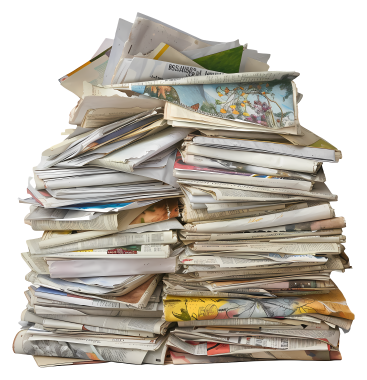
Thanks, Mom, for saving all those old newspaper clips!
I’ve been doing some introspection lately, prompted by an impending move. Lots of boxes to go through. Lots of packing up.
The last time I moved, I donated scores of books to local libraries, keeping only those I couldn’t do without. Now, I have to cull those remaining books, augmented by recent purchases (some of which, I am ashamed to say, are new editions of the same ones I donated).
But books are heavy. I can’t take them all. Besides, based on past experience, I’ll just buy them again wherever I land.
Some of my introspection comes from opening old boxes to see what’s in them. It turns out that one of them contained every story, column, and feature I wrote for the Staten Island Advance from 1970 to 1977. I inherited that box from my mother, along with a million photo albums (and I thought books were heavy), and other stuff: deeds; birth, baptism, marriage, death, burial, and other certificates; loose photos that look like daguerreotypes; and other historical family documents.
Can’t throw those out!
But back to my mother’s clips: In the 1970s, the Staten Island Advance was read by everyone in the borough not still in diapers. I was just out of the Marines (yes, Virginia, I was a Jarhead) when I got the job and found out I could write. (My first effort made page one.)
I wrote about anything: murders, books, movies (I was, for a time, the paper’s movie critic), the courts, politics, human interest. You name it, I wrote it.
Today, local papers, including the Advance, are suffering, thanks to the Internet. But I look back on those days with love. (Thank God for proud moms.)
As I go through the clips, I recall some of the stories:
The Gewandhaus Orchestra. During the height of the Cold War, the famous East German orchestra, banned from Manhattan venues, including Carnegie Hall, was forced to play at the smallish Paramount Theater on Staten Island. The city editor, the saintly Bob Popp, got wind of it and sent me to cover the story. I was treated to one of the great musical experiences of my life.
Willowbrook. I didn’t cover the original story. Advance reporter Jane Curtin (no relation to the actress), who should’ve won a Pulitzer but whose stories were never submitted for the award, broke it. (Later, I won an AP award for a crime story; it was the first piece ever submitted by the Advance for consideration.) Willowbrook was the disgraceful warehouse-like facility filled with patients suffering from mental and physical disabilities. Only when Geraldo Rivera brought a film crew in (proving that a picture is indeed worth a thousand words) did politicians move to close the horror. One year later, I covered the staff strike at Willowbrook. Embarrassed by the coverage, and by their low wages, workers left 6,000 patients alone in their wards. I was so appalled that I recruited friends to go in and help. Some were combat veterans who said they’d gladly go back to Vietnam rather than return to those wards. I still remember the trucks loaded with produce donated by New Jersey farmers, and the college kids and Harlem church choirs who showed up to change adult diapers and bathe helpless people.
The LNG Explosion. Someone thought it would be a good idea to store liquid natural gas on Staten Island. So, they filled a tank with LNG and then drained it as a “safety” test. Residual gas in the tank’s lining blew up, killing 44 workers. Now, no LNG is allowed anywhere in the city of New York.
I could go on and on: blood dripping from a ceiling after a murder in the apartment above; a decapitated driver; a shocked judge who ordered a father arrested in court after his runaway daughter, 15, tearfully revealed that Dad had being raping her for years.
Hundreds of stories. Thanks, Mom! I learned to write at that local paper, and it stood me in good stead when I eventually made my way to the New York Times.
Lawrence De Maria has written more than 30 thrillers and mysteries. He still gets up every morning and reads the Villages Daily Sun in Florida.