How Wintering changed my perspective on the long goodbye.
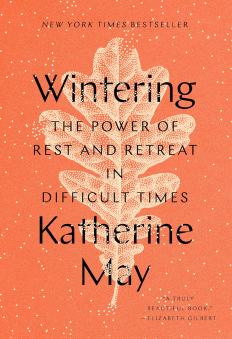
I was in a completely different space when I originally picked Wintering: The Power of Rest and Retreat in Difficult Times to build my November column around. Back then, I didn’t yet know that Scout, my beloved beagle, has cancer and, likely, less than a year to live. Things that were relevant before now seem immaterial, while other mundanities have, perforce, muscled themselves to the forefront of my attention.
My 38 years of life have been remarkably free of grief. I am fortunate enough to still have both my parents, and the deaths I’ve mourned have been largely expected, if no less painful because of that. Suddenly, however, I’ve entered a period of what author Katherine May calls “wintering.”
“Wintering is a season in the cold,” she writes. “It is a fallow period in life when you’re cut off from the world, feeling rejected, sidelined, blocked from progress, or cast into the role of an outsider…Perhaps you’re in a period of transition and have temporarily fallen between two worlds.”
Thanks to my loved ones, I can say that I have not felt cut off from the world during this fallow period. Countless people checked in on me, offered help, and supported me in tangible, concrete ways without having to be asked. I’ve never been so grateful and aware of the blessings of community.
Nonetheless, I feel indefinitely suspended between two worlds: the one that contains Scout, slumbering peacefully here next to me, and the one that soon will not. It’s hard for me to imagine the latter.
May writes poignantly about sadness in a way that resonates with me during this season of sorrow:
“[I]f happiness is a skill, then sadness is, too…It is the practice of allowing ourselves to feel it as a need. It is the courage to stare down the worst parts of our experience and to commit to healing them the best we can.”
I have been allowing myself to feel this sadness daily; I have never understood anticipatory grief before as I do now. Scout is confused and a little put off by the frequent teary embraces I bestow upon her, but the extra treats she’s getting to combat her chemo nausea probably make up for it.
There have been moments, too, of relief and comfort in the dark. My partner, always a source of compassion and kindness, has been a beacon of love throughout this ordeal. As I’ve had to take day after day off work to care for Scout, my boss and colleagues have rallied around me, expressing how much they care for and support me. As May puts it:
“We traveled through the dark moments together…We raged and grieved together. We were overcome with fear…When everything is broken, everything is also up for grabs. That’s the gift of winter: it’s irresistible. Change will happen in its wake, whether we like it or not. We can come out of it wearing a different coat.”
As Scout and I walk through the autumn of her life together, it’s hard not to ask myself if I’ve done something wrong, because this kind of grief feels like a cosmic punishment, even as I know it’s simply the result of time passing. But, reminds May:
“You’ll find wisdom in your winter, and once it’s over, it’s your responsibility to pass it on. This may involve the breaking of a lifelong habit, one passed down carefully through generations: that of looking at other people’s misfortunes and feeling certain that they brought them upon themselves in a way that you never would. This isn’t just an unkind attitude. It does us harm, because it keeps us from learning that disasters do indeed happen and how we can adapt when they do.”
I don’t feel, at the moment, that there’s wisdom in my wintering, but that’s probably not unique to me. What does persist, though, is a low-grade wonder that, every day, I’m able to get up and continue to exist in the face of new and terrible knowledge. There is a gift, too, in being able to so consciously enjoy the time I have left with my dear companion, who thankfully seems to feel no pain.
If it will soon be winter in my heart, just as it is in the outside world, I can endure it with the memory of Scout to warm me during the long, cold nights.
Mariko Hewer is a freelance editor and writer, as well as a nursery-school teacher. She is passionate about good books, good food, and good company.