How Jenny Slate helped me work through difficult feelings about being childless.
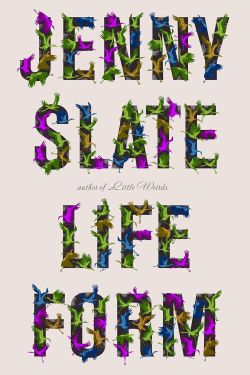
I bought Jenny Slate’s second book for adults, Lifeform, without bothering to check what it was about because I’ll read anything she writes — up to and including instructions on loading the dishwasher. She’s just that funny, clever, and moving.
In some ways, this approach turned out to be a mistake. Although Lifeform is (naturally) as incisive and insightful as her first book for grownups, Little Weirds, it centers on her journey into motherhood, a topic about which I have complex feelings. I started to think that maybe this book wasn’t for me, that I didn’t deserve to read about something I’d chosen to deny myself, and that it would only hurt to do so.
Fortunately, Slate’s writing is expansive enough to encompass many kinds of community and parenting; she’s inherently able to reel readers in and make them feel at home.
Recounting an overheard conversation in a restaurant, she opines:
“I am spying on them and their situation is reaching out to me, but I am here alone and I am once again not sure if I know how to be with people, which is my guess at why the anxiety suddenly appeared.”
Girl, sing it!
Being able to relate to this anxiety — post-pandemic, who among us hasn’t had to relearn what it means “to be with people”? — got me thinking about Slate and her philosophies. I imagined she wouldn’t be the kind of person who denied me access to her book, her feelings, simply because I wasn’t a mother myself. I thought she might even tell me there are many different ways to be a parent, and many different beings to take care of even if one hasn’t birthed them, and perhaps that there are things a mother feels that a non-mother can also relate to.
When Slate tells her newborn daughter, “I hold you in the dark and I keep imprinting on you that this is where the love is, that it will find you even in the dark, even if you have a new brain that you just made,” I think about those first few hectic autumn weeks at my nursery school that will soon begin anew, the weeks when children fall asleep in my arms — exhausted from homesickness — and I hold them through their naps. Of course I’m not their parent, but I can still be a place of love for them.
Giving voice to feelings I didn’t even know I had, Slate reflects that “I felt glad to know myself as neither ‘rejected’ nor ‘accepted,’ just the type of person who would make time in her day to visit a dog.” Indeed, spending time with my dog is one of my favorite ways to be a non-parent parent. (She’s a big responsibility, but the worst thing I have to worry about is pee accidents, which takes some of the fear out of the equation.)
When the author tells herself, “What a train ride, but you rode it out. You never closed your eyes once while it all happened on the rails just now. This whole time you have tolerated what was happening in your head. You have used your own head to tolerate what is inside of it. And actually you do not want to get away from your head — you want to use your head,” it feels relatable, as though she’s reminding us that we’re all moving inexorably forward, but maybe it’s in a way that’s optimistic and aspirational rather than full of dread.
As I doggy-paddle dazedly into the fall and beyond, I salute you, parents and non-parents alike. May we all continue to remember what it feels like to be with, and in community with, other people.
Mariko Hewer is a freelance editor and writer as well as a nursery-school teacher. She is passionate about good books, good food, and good company. Find her occasional insights of varying quality on Bluesky at @hapahaiku.bsky.social.