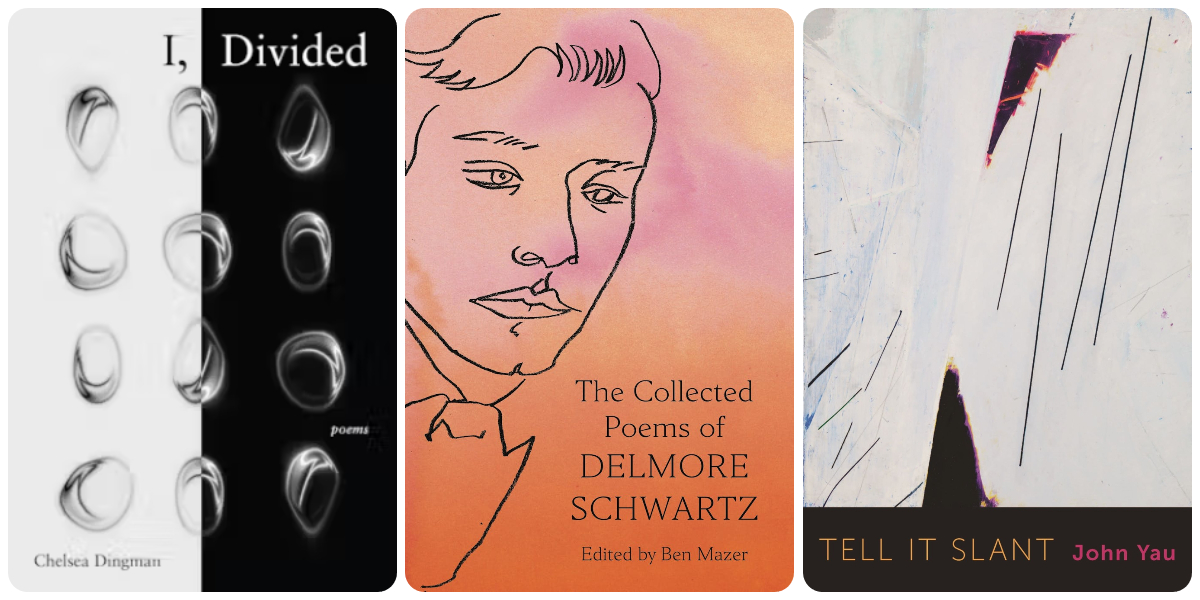
New collections to make life more lyrical.
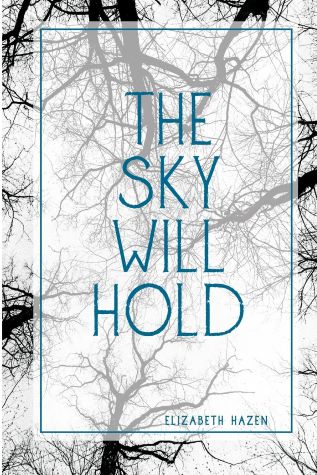
The Sky Will Hold, Elizabeth Hazen’s third collection, represents a vital amplification to the admirable work she began through her previous books, Chaos Theories and Girls Like Us. The attention to syllabic progression remains, the interest in poetic forms expands, all while crafting syntax that is conversational and inviting. But this latest book is more willing to be “imperfect,” or at least discursive, in ways that lead to what can only be called wisdom.
The movement in early poems to frequently resolve in rhyming couplets or near-rhyming couplets embodies a desire for things to remain joined, stable, legible — like a marriage or a long-term friendship. There is a pleading in this, but one that isn’t sophomoric. Rather, the speaker of these poems has been persuaded to take comfort in the small, ordinary bliss instead of the adventurous chaos that is often idealized, as here, in “Second Marriage”:
and you, your puttering like a well-loved song.
I never thought I’d live this long.
Hazen returns again and again in The Sky Will Hold to the glose, a poetic form that makes use of a borrowed line from another writer’s text, which seems to both echo and subvert sentiments of estrangement and insecurity. “I have been a stranger / in every house I’ve entered,” she writes in “Hell’s Half-Acre.” Ostensibly, one could read this as an expressed wrestling with the nuances of blended families colliding with midlife angst, but it could also be understood as a description of the glose form itself. One text must enter the “house” of another text.
One writer’s words must also be blended into the “family” of another writer’s words. Each text confronts whether to remain strangers to one another or to trust in the possibility of new, synthesized wonder. After all, in the opening poem, “Approximations,” the speaker admits, “I wouldn’t / trust myself to say a thing, betrayed as I am / by language.” And yet, instead of silence, Hazen answers that perceived betrayal with a deep belief in reaching for language that has intrigued, instructed, or mystified her. Reading, clearly, is an ocular pleasure for her.
My favorite of the gloses is “Glose for Sarah,” a poem that engages with W.H. Auden, with race, and with the unfairness of loss, and does all this in syntax full of euphony and tenderness. It is the kind of poem that unlaces the Gordian knot of grief without the blunt stroke of un-crafted sadness. In other words, a poem for a friend that makes art of friendship. A poem that laments so we understand the artfulness of lamenting. How necessary such a poem seems in the current moment.
Hazen’s poems throughout The Sky Will Hold engage with the invisibility that middle-aged people, but more specifically women, often feel. They are deft and stridently attentive to image clarity. This is an effective method of avoiding the maudlin navel-gazing that could erupt within such themes. But the speakers of the poems also question their own comfort, their own worthiness to be loved.
“It was then I knew your kindness would undo me,” Hazen writes in “Horses,” and who among us hasn’t felt that way when confronted with a lover who is sincere, deliberate, and honest? One waits for the other shoe to drop, and it does, but it’s the pleasant thud of quotidian adoration, which I think many of us convince ourselves we don’t deserve. Hazen’s poems, then, speak for us, not for the illicit desires we don’t voice, but the earnest ones even harder to admit to.
If her poems act as proxies for what is unspoken, Hazen herself also recognizes the value of someone speaking up for her. The Sky Will Hold moves through that value in the persona poem “Lady Tremaine’s Defense,” written in the voice of Cinderella’s stepmother. In a book that is quite optimistic, here is an unguarded moment of cynicism, self-justification, and defiance. One part of the poem confesses:
It’s true, I do feel jealousy — her beauty
is a cruelty in itself, her youth a ceaseless
taunting that deepens my own creases, turns
downward the arc of my lips.
While its conclusion proclaims:
Glass slippers, glass ceilings — I’d like to shatter
everything that breaks, but with my luck she’d cut
her feet, for which I’d also suffer blame.
As a reader, I find the shift in valences and the willingness not to remain on the expected narrative path of autobiography — readers sometimes want poetry collections to read like memoirs-in-verse — to be a pleasurable and heartfelt move. Being a stepparent may be one of the most difficult modern social endeavors. Even within my own autobiography, I recognize how easy it was to cast my stepmother in the role of unscrupulous villain, without realizing all that she did to care for my father before she passed. Hazen’s poems confront the thanklessness of it all but also remind us that there are no saints or sages among us, only complicated humans who must find a way to heal.
I’ve long thought that Elizabeth Hazen was one of the most underrated poets both in Maryland, where she grew up and currently lives, and more broadly in American Arts and Letters. Intelligent and heartfelt, loving and precise, merciless toward herself without becoming nihilistic, she seems a natural inheritor of the legacies of Sharon Olds and Toi Derricotte. The Sky Will Hold will hold readers in rapt attention, if not downright awe. I am convinced that this is the book that will bring Hazen’s work further and further into the light, and thus leave us all a bit more luminous.
[Editor’s note: Elizabeth Hazen will appear at the Gaithersburg Book Festival in Gaithersburg, MD, on Saturday, May 16th. Learn more here.]
Steven Leyva’s latest poetry collection is The Opposite of Cruelty.