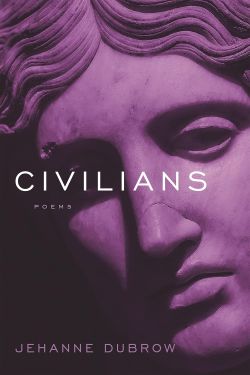
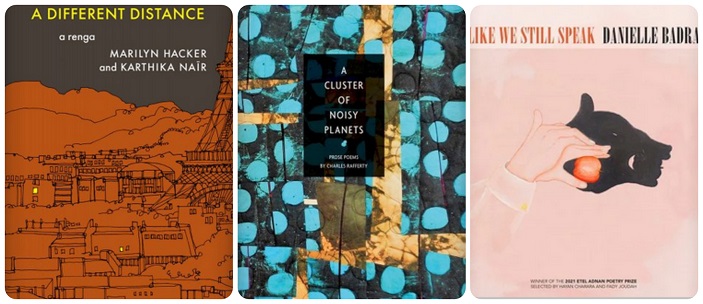
New collections to make life more lyrical.
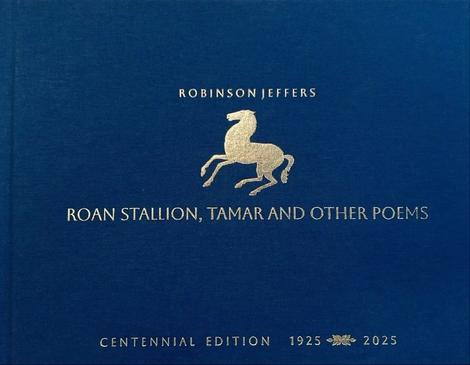
Perhaps it has something to do with the need for grander perspective or with reclaiming a vision that’s been lost, but as we commemorated America’s 250th anniversary this July, I found myself reading Robinson Jeffers. A centennial edition of Roan Stallion, Tamar and Other Poems, arguably his most important work, was reissued last year by Tor House Press. It’s been in my stack for months, but now it seems oddly fitting.
Jeffers was once as widely read as his contemporary Robert Frost. But while Frost was an East Coast poet, well connected in literary circles at home and abroad, Jeffers was a California iconoclast indifferent to the establishment. Frost remains one of our best-loved poets; Jeffers has largely been forgotten. Perhaps his work was too unsettling.
He certainly wrote against the current, though he doesn’t fit with the Modernists, either. He wasn’t experimenting with language or making poetry new. Instead, he harked back to biblically inspired stories and the epic narratives of Ancient Greece. He subscribed to a philosophy he termed “inhumanism” — which sublimates humanity, placing it in the wider context of the natural world — and lived with his family at Tor House and Hawk Tower, which he built of stone on the cliffs overlooking Big Sur.
In some ways, he was ahead of his time. As an environmentalist, Jeffers, analogous to a literary Ansel Adams, was one of our first “eco-poets,” inspired by his deep connection to nature.
Here’s an excerpt from “Hurt Hawks,” which is still occasionally anthologized:
The wild God of the world is sometimes merciful to those
That ask mercy, not often to the arrogant.
You do not know him, you communal people, or you have forgotten him;
Intemperate and savage, the hawk remembers him;
Beautiful and wild, the hawks, and men that are dying, remember him.
My interest in Jeffers was initially piqued a few years back, when a listener to my “Read Me a Poem” series suggested his poem “The Purse Seine.” The muscularity of Jeffers’ writing, its authority and darkness, struck me immediately. He was like the Prophet Jeremiah, sounding alarms about our disconnect from nature and herd mentality. He knew the environmental dangers which face us today were coming, writing:
The inevitable mass-disasters
Will not come in our time nor in our children’s, but we and our children
Must watch the net draw narrower, government take all powers — or revolution, and the
new government
Take more than all, add to kept bodies kept souls — or anarchy, the mass-disasters.
We didn’t heed his words, and “The Purse Seine” ends quite shockingly:
Do you marvel our verse is troubled or frowning, while it keeps its reason? Or it lets go,
lets the mood flow
In the manner of the recent young men into mere hysteria, splintered gleams, crackled
laughter. But they are quite wrong.
There is no reason for amazement: surely one always knew that cultures decay, and life’s
end is death.
“The Purse Seine” is not included in the collection under discussion here, but you can listen to my recording of it here. After I made it, Tim Hunt, a poet and eminent Jeffers scholar, contacted me about contributing to the fall 2025 issue of Jeffers Studies, which included short features marking the 100th anniversary of Roan Stallion, Tamar and Other Poems.
“Roan Stallion” is a mythic narrative in which a young mixed-race woman named California confronts the possibility of transcendence in the form of a beautiful godlike horse, which is brought home by her drunken husband. The lines are unusually long, composed in what Jeffers termed “rolling stresses.”
The landscape format of this new edition gives the lines breathing room. You see them on the page as Jeffers conceived them, and in this way, fully experience the cadence of his verse and its enormous sweep. Here is an excerpt:
It was like daylight
Outdoors and she hastened without faltering down the footpath, through the dark fringe of twisted oak-brush,
To the open place in a bay of the hill. The dark strength of the stallion had heard her coming; she heard him
Blow the shining air out of his nostrils, she saw him in the white lake of moonlight
Move like a lion along the timbers of the fence, shaking the nightfall
Of the great mane; his fragrance came to her; she leaned on the fence;
He drew away from it, the hooves making soft thunder in the trodden soil.
Wild love had trodden it, his wrestling with the stranger, the shame of the day
Had stamped it into mire and powder when the heavy fetlocks
Strained the soft flanks. “Oh, if I could bear you!”
Jeffers’ philosophy is stark and his symbolism unsettling. Although California glimpses the divine power represented by the horse, ultimately, she cannot unite with it or surmount her flawed humanity. At the end of the poem, when the stallion kills her husband, she is “moved by some obscure human fidelity” to raise her rifle:
she fired three times before the haunches
crumpled sidewise, the forelegs stiffening,
And the beautiful strength settled to earth: she turned then on
her little daughter the mask of a woman
Who has killed God. The night-wind veering, the smell of the
spilt wine drifted down hill from the house.
“Tamar” is another epic, inspired by the Old Testament story of the first woman in the lineage of Christ. In the Bible story, Tamar disguises herself as a prostitute and has sex with her father in order to carry on the family line.
The incest theme is critical in Jeffers’ poem, but he takes it up in different ways here and examines its disturbing implications. He transports the setting to California and poses questions about fate and the nature of God. He also raises issues of morality and human nature’s entanglement with evil.
Interestingly, Jeffers wrote “Tamar” around the same time T.S. Eliot’s The Wasteland was published. In many ways, “Tamar” feels un-American in that it doesn’t fit our customary narratives. It doesn’t even fit our uncomfortable narratives. Jeffers’ view of the American West seems to go back to a mythic realm predating the United States and its high ideals. I wonder if this might be another reason he’s missing from American literary curricula.
His shorter pieces are more accessible, but his vision remains uncompromising. Are we ready for it? As we reach our 250th anniversary, wondering how the American experiment went so terribly wrong, Robinson Jeffers makes a thought-provoking read. The reissue of this collection underscores that he is a canonical poet who still has something to say to us.
Amanda Holmes Duffy is a columnist and poetry editor for the Independent and the voice of “Read Me a Poem,” a podcast of the American Scholar.