Proclaiming certain books “the best” just isn’t our style. (Such sanctimony!) Instead, here are the titles we couldn’t stop thinking about this year. We hope they’ll make you think, too!

 Storm at the Capitol: An Oral History of January 6th by Mary Clare Jalonick (PublicAffairs). Reviewed by Chris Rutledge. “Jalonick does a fine job describing the attack. She gives us an hour-by-hour recap of what happened in the words of those who were there — on both sides of the aisle and both sides of the barricades. This breadth of perspectives is what gives the book its strength.”
 Being Thomas Jefferson: An Intimate History by Andrew Burstein (Bloomsbury Publishing). Reviewed by Peter Cozzens. “Burstein’s penetrating insights are grounded in the historical record, not speculation or ‘psychobabble.’ In Jefferson’s case, the source material is prodigious. He wrote some 18,000 pieces of correspondence and kept a 656-page record of every letter he sent or received. Burstein makes this the framework of the book.”
 Winter: The Story of a Season by Val McDermid (Atlantic Monthly Press). Reviewed by Anne Cassidy. “As a denizen of the north, McDermid knows a thing or two about wintertime, and she shares it through stories, memories, and observations. She acknowledges that winter is the ‘poor relation of the seasons,’ but she’s always liked it, in part because it provides an excuse to curl up on the sofa with a good book.”
 Cromwell’s Spy: From the American Colonies to the English Civil War: The Life of George Downing by Dennis Sewell (Pegasus Books). Reviewed by Stuart Kay. “Nonetheless, Downing’s tangible legacy seems fitting. The clever mortar lines painted on the buildings on his eponymous street — to make the brickwork seem more even and of higher quality — indicate deceit and parsimony. Downing never lived on Downing Street; its construction was simply a quick business venture to make money. As Winston Churchill observed, the buildings were ‘shaky and lightly built by the profiteering contractor whose name they bear.’ Sewell’s biography of this ‘profiteering contractor’ is an engaging, albeit ineluctably grim, read.”
 Kings and Pawns: Jackie Robinson and Paul Robeson in America by Howard Bryant (Mariner Books). Reviewed by E. Ethelbert Miller. “Bryant notes a meeting that took place on December 3, 1943, at the Roosevelt Hotel in New York City between Major League Baseball’s 16 team owners and Robeson. At the time, Robeson was highly celebrated for his achievements in the theater, including for his role as Othello. He was also an outstanding athlete and felt that Black people were ready to play in the big leagues. Most of the owners, though, didn’t want Blacks to join their teams, but one exception was Branch Rickey of the Brooklyn Dodgers.”
 One Aladdin Two Lamps by Jeanette Winterson (Grove Press). Reviewed by Nicole Schrag. “The book makes for such a smooth, funny, provocative reading experience that it’s easy to miss its breathtaking range. Winterson’s imaginative leaps are made possible by her Arabic source text, which is famous for its multilayered stories, twists of fate, and new beginnings. Her reading of the Nights is an argument for how storytelling — then and now — is crucial for survival and for sustaining the possibility that we might even thrive.”
 The Oak and the Larch: A Forest History of Russia and Its Empires by Sophie Pinkham (W.W. Norton & Company). Reviewed by Jonas Vaicikonis. “Her title sets up the big idea right away. The deciduous oak, which thrives in ‘European Russia,’ evokes more than a thousand years of connection to the rest of Europe and the West. The coniferous larch, which grows across Siberia, gestures toward Russia’s vastness and its ties to Asia. Pinkham uses this botanical contrast as a narrative compass. Instead of marching readers through a parade of battles, rulers, and dates, she invites us to wander with her through folktales, literature, and film toward a deeper sense of how the natural world shaped Russian identity across the landmass of Eurasia.”
 The Boundless Deep: Young Tennyson, Science and the Crisis of Belief by Richard Holmes (Pantheon). Reviewed by Raima Larter. “As the author demonstrates, these were difficult years indeed. Tennyson’s father, Dr. George Tennyson, grew depressed and violent, descending into alcoholism before eventually dying. Alfred, a student at Trinity by then, had to leave school and try to make his way. There were many problems to contend with, including the mental illness of his younger brothers, the loss of the family home when a new rector was installed at Somersby, the death of Alfred’s best friend, and on and on. Through it all, he wrote.”
 Kin: A Novel by Tayari Jones (Knopf). Reviewed by Tara Campbell. “Not all of it is humorous, but even when things get heavy, a sense of comfort pervades because of the strength of the relationships Annie and Niecy have cultivated between themselves and the other people in their lives. Family is more than blood in Kin, and it’s stronger than all the pain and heartbreak life serves up. Ultimately, Jones has served up an enjoyable and engrossing novel with love at its core.”
 A Beast Slinks Towards Beijing: A Novel by Alice Evelyn Yang (William Morrow). Reviewed by Marcie Geffner. “Weihong and Ming tell their stories from Ānshān, an industrial area in China’s northeastern Liáoníng Province. The area was occupied by the Japanese from 1918 to 1945, and then by the Soviet Red Army near the end of World War II. After the war, the area was returned to China, only to be caught up in the country’s violent and repressive Cultural Revolution in the late 1960s. The author steers clear of China’s Communist politics to focus instead on Ming’s life under the oppressive Japanese occupation and Weihong’s involvement in the brutality of the Cultural Revolution.”
 Scale Boy: An African Childhood by Patrice Nganang (Farrar, Straus and Giroux). Reviewed by Gretchen Lida. “In the end, Scale Boy might feel to readers unfamiliar with Cameroon the same way Jonathan Swift’s ‘A Modest Proposal’ feels to those unfamiliar with 18th-century England. In the latter case, it’s the reader’s job to find out whom ‘the Pretender of Spain’ refers to. In the former, the reader must learn what granduras, sanjas, and other things are. Perhaps reading, like traveling, should be an act of de-centering ourselves. By working to understand different cultures, we also work to undo the horrors of colonialism. Because it forces us to do that work, Scale Boy is worth its weight in gold.”
 The Valley of Vengeful Ghosts: A Novel by Kim Fu (Tin House). Reviewed by Emily Hall. “A harrowing work of psychological horror, Kim Fu’s third novel, The Valley of Vengeful Ghosts, explores the complexities of caretaking. The story begins after its protagonist, Eleanor Fan, has lost her mother, Lele, to cancer. Following Lele’s last wishes, Eleanor uses her inheritance to buy a house. Although Eleanor is initially excited by this purchase, she soon realizes that the house is in disrepair. Overwhelmed by home ownership and still grappling with grief, she struggles to take care of herself.”
 Mule Boy: A Novel by Andrew Krivak (Bellevue Literary Press). Reviewed by Raima Larter. “The short novel explores the myriad effects trauma can have on a young life through unflinching depictions of addiction, problems connecting with others in intimate relationships, and the overarching, driving need for a person who suffered early trauma to achieve closure and, ultimately, to confess his own role in the tragedy. And the author does it all in exquisite prose that explores a fascinating period in American history.”
 Western Star: The Life and Legends of Larry McMurtry by David Streitfeld (Mariner Books). Reviewed by Eugene L. Meyer. “As Streitfeld walks us through McMurtry’s serial adventures, through the making of films and the writing of books, he reveals the backstories that contemporaneous reviewers had somehow missed. ‘The Last Picture Show,’ for instance, was a hotbed of, well, hot beds as the casting couch took on new meaning on and off the set. During filming, McMurtry, Streitfeld writes, had an affair with debut actress Cybill Shepherd. But then, Shepherd slept with Jeff Bridges, too, who played her boyfriend in the movie. (There’s enough here for another film, ‘Backstage at the Last Picture Show.’)”
 Sweet Home Feliciana: Family, Slavery, and the Hauntings of History by Rashauna Johnson (Cambridge University Press). Reviewed by Nicole Schrag. “In between these bookends, Johnson paints a rich picture of a place that could’ve easily been written off as an antebellum backwater, arguing persuasively for its complex global significance. Feliciana did have plantations owned by white families and worked by enslaved Black people. But long before that, it was home to Tunica Indians and was later subject to conflict among the Spanish, French, and American governments — and those who would rebel against them.”
 The Winter Warriors: A Novel by Olivier Norek (Atlantic Monthly Press). Reviewed by Lawrence De Maria. “It was cold when Stalin invaded Finland in November 1939. How cold? The cannon-fodder conscripts (usually Ukrainians and other non-Russian minorities deemed expendable) froze to death in large numbers because the Soviets failed to provide them with proper winter garb. When these men were shot, their chances of making it often hinged on whether the wound froze before they bled out. Like I said, it was cold.”
 Paradiso 17: A Novel by Hannah Lillith Assadi (Knopf). Reviewed by Mike Maggio. “In many ways, the novel, while telling the story of the author’s father, relates the broader story of the Palestinian diaspora: the displacement, the state of being dispossessed, the sense of alienation, the absence of roots. It’s as if the plight of the Palestinians has been condensed into a single individual whose life mirrors the suffering of all his compatriots. And, yet, Paradiso 17 is by no means an allegory, nor does it attempt to make a point. Rather, it follows a narrative construct that stands on its own with characters who are well developed and a plot that is keenly rendered.”
 London Falling: A Mysterious Death in a Gilded City and a Family’s Search for Truth by Patrick Radden Keefe (Doubleday). Reviewed by Mariko Hewer. “Yet almost immediately, there were cracks in this story. Why, if Brettler was suicidal, had he texted his mother about an upcoming driver’s license exam for which he wanted to study? Why did Shamji tell a friend that he had ‘just been heating up knives and cleaning up blood’ shortly before Brettler’s fall? Why, after leaving Riverwalk on the fatal night, did Shamji make an abrupt return?”
 Alaska Literary Field Guide: Art, Ecology, Poetry, edited by Marybeth Holleman, Nancy Lord, and Shaelene Grace Moler (Skipstone). Reviewed by Tara Campbell. “The most immediately striking feature of the guide is its full-color format, showing the artwork off to its greatest advantage. The imagery accompanying each entry is vibrant and precise in depicting the state’s diverse regions and lifeforms (except for a tiny blip in which a halibut is rendered with its eyes on the left instead of the right). The work of 20 different artists has been curated for an overall effect of warmth and fullness. The visuals alone are worth the price of the book.”
 The Shock of the Light: A Novel by Lori Inglis Hall (Pamela Dorman Books). Reviewed by D.A. Spruzen. “Compellingly presented and beautifully written, The Shock of the Light is a story of heroism, the barbaric toll of war, and the unbreakable bond of twins. It mines the uplifting spirit of love and redemption that can arise amid extreme circumstances. This meticulously researched book is at once informative and engaging. Theo and Tessa will linger in the reader’s memory long after the last page has been turned.”
 The Subtle Art of Folding Space by John Chu (Tor Books). Reviewed by Andrea M. Pawley. “Infinite universes and skunkworks exist, and maintaining them is crucial. The universes’ physics will be compromised if anomalies in the skunkworks’ gates and valves aren’t fixed. When Ellie encounters one such anomaly keeping her comatose mother alive, she knows that leaving the faulty area alone is out of the question; Vera would never let such an irregularity persist. So, Ellie corrects it, and her mother dies. The fix was the right thing to do. Vera’s illness had gone on for an inexplicable amount of time, after all, and caused a great deal of suffering.”
 Small Town Girls: a writer’s memoir by Jayne Anne Phillips (Knopf). Reviewed by Kristin H. Macomber. “Small Town Girls begins with descriptions of Phillips’ hometown, Buckhannon, and her family’s longtime connections to and livelihoods in the Allegheny Mountains. She provides an insightful historical overview, connecting the region’s verdant past, from ‘a thousand years of paradise for flora and fauna,’ to its current beleaguered state, with its rivers poisoned and its forested topography scratched away — the result of a succession of assaults from timber milling and coal mining, strip mining and mountaintop mining, and finally, fracking. The chapter titled ‘Paradise Lost: West Virginia,’ which weaves Phillips’ family chronology through the state’s centuries of downward spiral, should be required reading in every U.S. history class in America.”
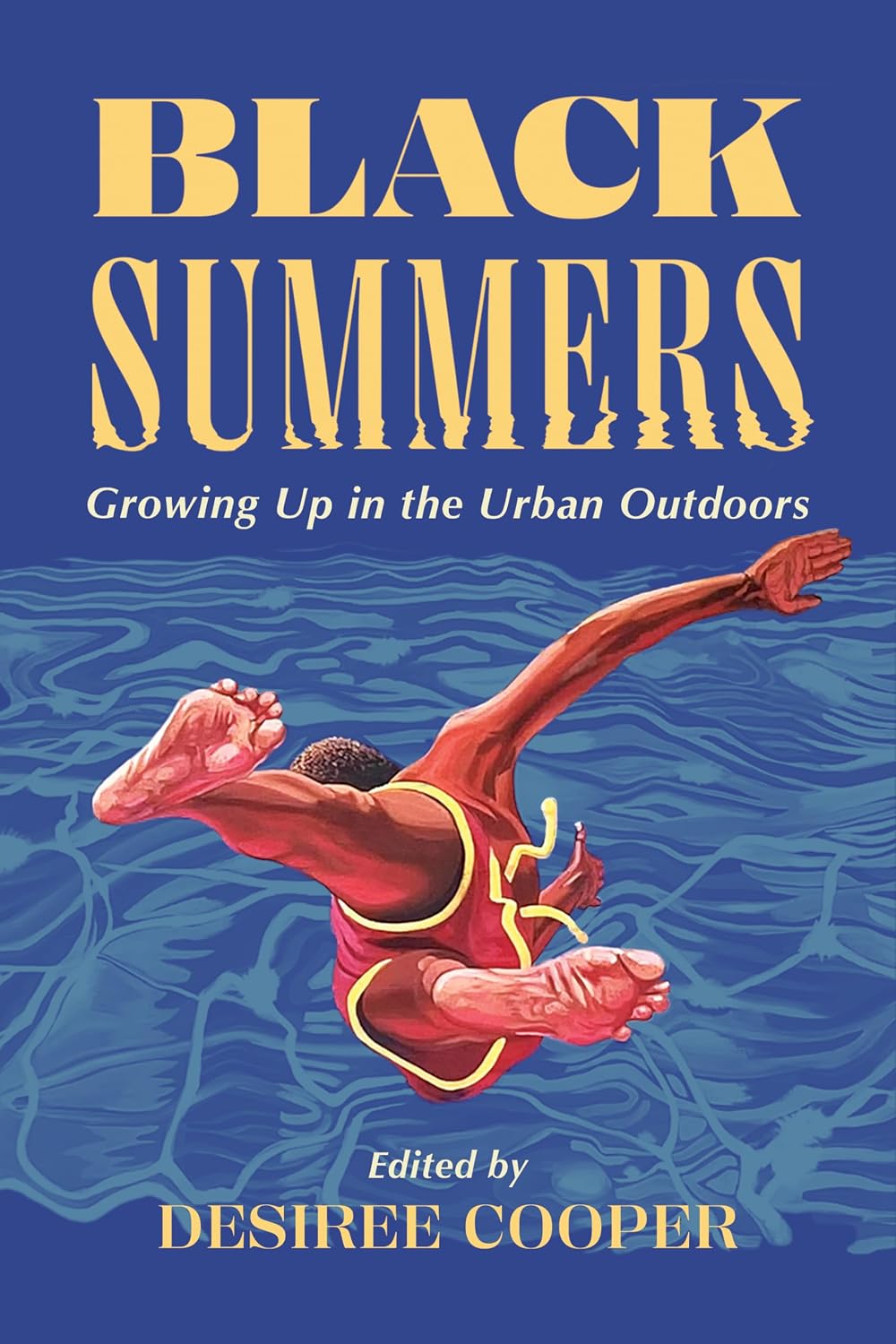 Black Summers: Growing Up in the Urban Outdoors, edited by Desiree Cooper (Wayne State University Press). Reviewed by Cheryl A. Head. “Sometimes, a book connects with you viscerally and you don’t know why. That isn’t the case with Black Summers: Growing Up in the Urban Outdoors, by Pulitzer Prize-winning journalist and author Desiree Cooper. These 33 collected works set in and around Detroit are a contemplation of my own formative years in the city.”
 The Gospel According to Hobby Lobby: Inside a Billionaire Family’s Quest to Craft a Christian Nation by Michael Blanding (PublicAffairs). Reviewed by Jennifer Bort Yacovissi. “Thus enters David Marvin Green, born in 1941 to Walter Green, a receiver of holy visions starting at age 24, and Marie Lark, once pastor of the Emporia, Kansas, branch of the Church of God of Prophecy (good on CGP for being enlightened enough to allow women preachers back in the day). David was one of six siblings who traveled across the Southwest with their parents as Dad opened new churches to meet the Pentecostal demand. The family was an early adopter of the prosperity gospel, believing that God rewards true believers with material benefits. They also believed that all giving must go to the church in support of spreading the Word, not to any other possibly worthy cause (such as, say, feeding the hungry).”
 Ten Clear Days by Eric Beck Rubin (Turtle Point Press). Reviewed by Clifford Garstang. “Mary makes it clear from the outset that she wants to die. She is 83 years old and, we learn, survived the Holocaust as a child. Her daughters disagree as to whether her wishes should be followed — she has a Do Not Resuscitate order in place — but the real question is what the hospital is required to do to comply with Canada’s Medical Aid in Dying law. The hospital is represented by a doctor who explains to Mary and the family the procedure it must follow, designed to ensure that the patient is competent by repeating her wish to die over a period of ‘ten clear days.’”
 Tiodora’s Letters: An Enslaved Woman’s Fight for Family and Freedom by Marcelo D’Salete; translated by Andrea Rosenberg (Fantagraphics Books). Reviewed by William Schwartz. “In English, writing about slavery tends to focus on the peculiar institution in the Unites States. However, with its translation of Tiodora’s Letters, Fantagraphics Books seeks to do broader justice to the subject by delving into a Brazilian slavery narrative. Author Marcelo D’Salete is Brazilian himself, and this translation from the Portuguese of his award-winning 2022 graphic novel is an exceptional synthesis of grim charcoal drawing with the historical record, dramatizing the 19th-century world where the elderly slave Tiadora tried and failed to correspond with her loved ones.”
 Questions 27 & 28: A Novel by Karen Tei Yamashita (Graywolf Press). Reviewed by David A. Taylor. “The narrative in Questions 27 & 28 centers on the period from 1942 through 1945, after President Franklin D. Roosevelt signed a WWII executive order authorizing the uprooting of roughly 120,000 Japanese Americans from their homes on the West Coast and detention in an archipelago of hastily built camps. (For generations, these were called ‘internment camps’; many now consider ‘concentration camps’ more accurate.) The story reaches backward and forward across decades, but to call it a novel about the camps is like saying Ulysses is a novel about a day in British-held Dublin.”
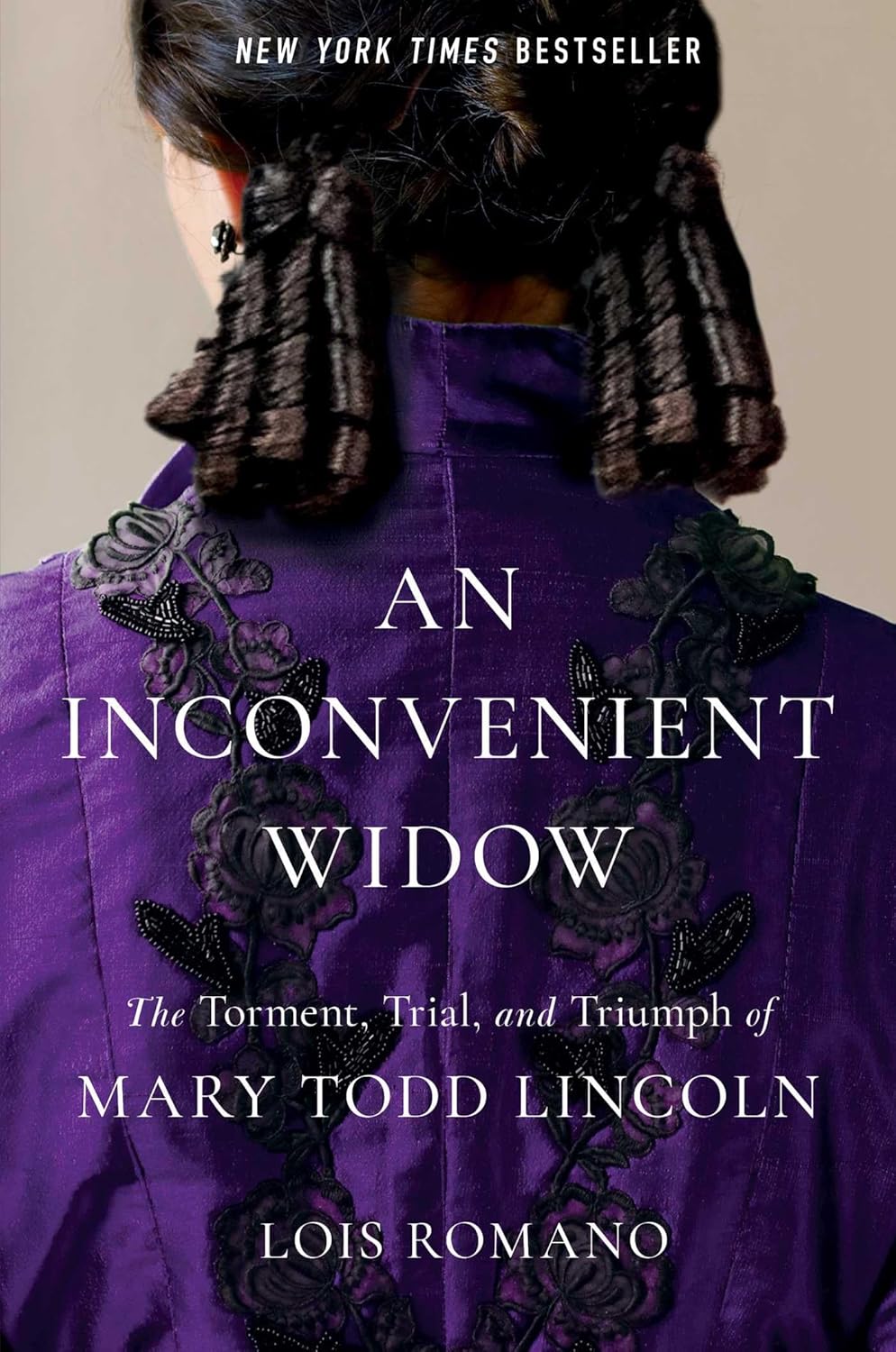 An Inconvenient Widow: The Torment, Trial, and Triumph of Mary Todd Lincoln by Lois Romano (Simon & Schuster). Reviewed by Justin H. Thompson. “For playwright Escola and countless others, Mary is like the gown: merely a vehicle for performance, a persona to inhabit. Where Romano succeeds in An Inconvenient Widow is by revealing a charming, maddening woman who seemed to lose a bit more of herself after each personal tragedy. It’s a testament to Romano’s corralling of a vast life into a readable volume that Mary Todd Lincoln, in all her complexity, still reads as a tragic figure worthy of historical reconsideration and maybe a little grace.”
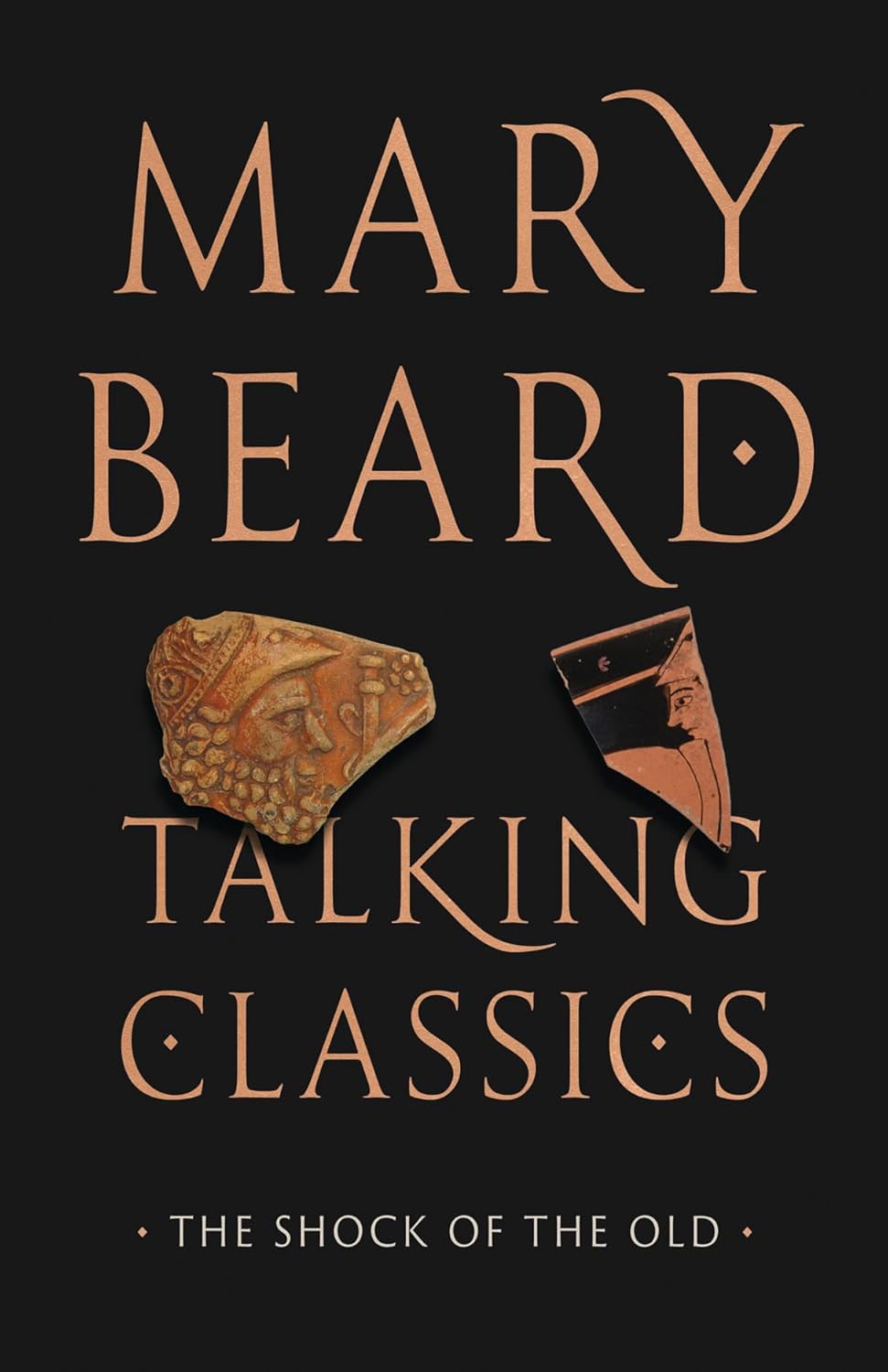 Talking Classics: The Shock of the Old by Mary Beard (University of Chicago Press). Reviewed by Gabrielle Stecher Woodward. “Like the best teachers, Beard doesn’t ask readers to do any intellectual work that she’s unwilling to undertake herself. Thinking alongside rather than talking down to her audience remains a central source of her appeal to armchair classicists, interdisciplinary scholars, and aspiring historians alike. Much of what distinguishes Beard as a grand dame of public humanities lies in this refusal to gatekeep: She treats the classical past as a realm accessible to anyone inclined not just to wonder but to ‘look our demons in the eye.’ No doctorate required, simply a willingness to take antiquity’s beauty and its ugliness in stride.”
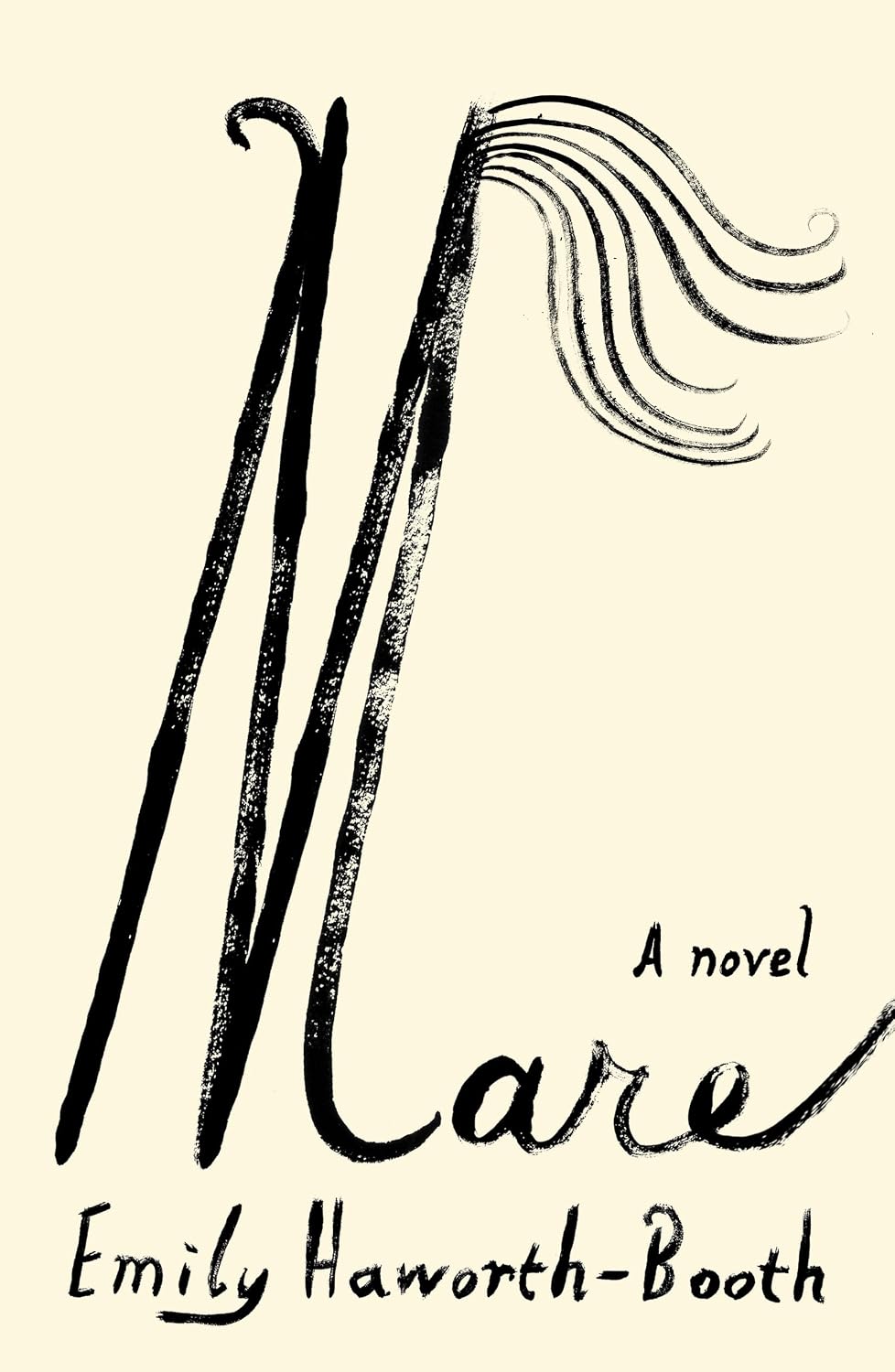 Mare: A Novel by Emily Haworth-Booth (Farrar, Straus and Giroux). Reviewed by Gretchen Lida. “All of this may make it sound like Mare is a stone-cold bummer, but there are glimmers of light and joy shining through the gloom. Lots of things in the narrative made my horse-girl’s heart sing, including the author’s inclusion of equine-specific sensory details and spot-on depictions of the human relationships that can flourish inside the barn and out. Rather than be more explicit and give anything away, I’ll leave it to readers to discover them on their own.”
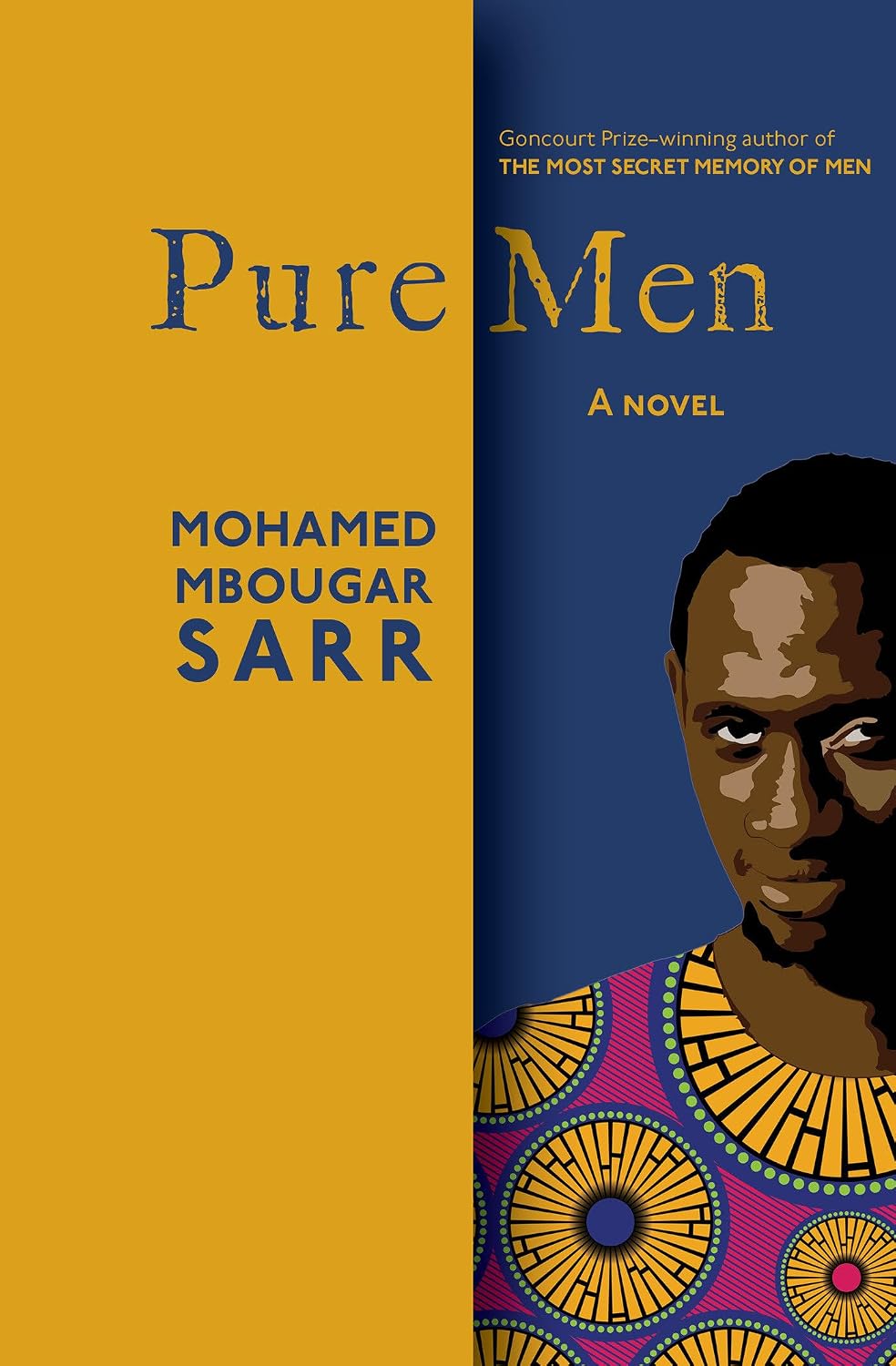 Pure Men: A Novel by Mohamed Mbougar Sarr; translated by Lara Vergnaud (Other Press). Reviewed by Susi Wyss. “In his search, Ndéné encounters a cast of characters, each with their own views on queerness. The imam at his mosque declares that homosexuality was imported by the West, the góor-jigéen must be removed from society, and any Muslims who defend them will go to hell. Ndéné’s father, in line to become the next imam, is slightly more tolerant: Even as he tells his son that homosexuality is a choice and he would disown any child of his who chose it, when he fills in for the imam, he calls upon the people to pray for mercy for the disinterred man’s soul.”
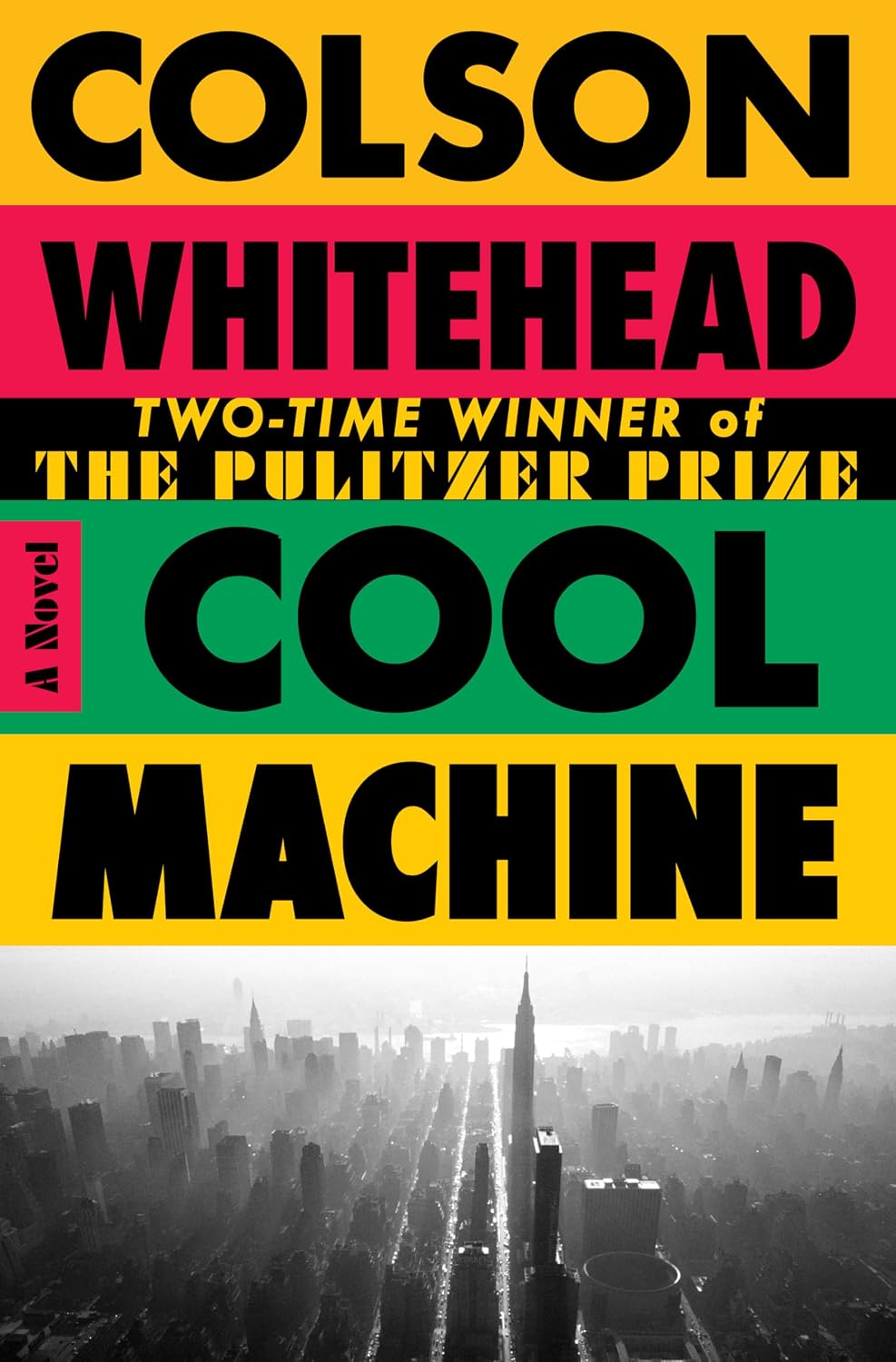 Cool Machine: A Novel by Colson Whitehead (Doubleday). Reviewed by Ryan Davison. “This first section captivates the reader with gritty realism, yet we are still unprepared for the intensity of the next. It begins two years later, when Ray’s wife, Elizabeth, enlists his longtime friend and colleague, Pepper, to serve as bodyguard for a shady art dealer. The chewed-up skeleton of an unglamorous Manhattan forms the backdrop to this hip, dark tale. Mutilated bodies lay in the wake of a hitman with a flat affect, creating disturbing situations and an existential climax with a vicious, unpredictable antagonist. Fear, humor, and violence all influence the tone of this section, but most memorable are its richly drawn, eccentric characters.”
 This Past Was Waiting for Me: A Chronicle at Quarter Century by Sarah Trembath (Lazuli Literary Press). Reviewed by Michele L. Simms-Burton. “Her approach to writing about gentrification and displacement challenges our orientation toward inhabiting shared spaces, education, and the roles of teachers in ensuring a more tranquil union. With a doctorate in education policy and leadership, Trembath is aware of how education in this country is not only skewed to present a benevolent narrative about the nation’s founding, but also how narratives tend to sanitize their own crimes against humanity.”
 Carryout: Stories by Hasan Dudar (University of Iowa Press). Reviewed by Mike Maggio. “Here lies the crux of Dudar’s narrative and the dilemma facing all immigrants, not just Arabs. How is one supposed to assimilate into a society that, for the most part, shuns you because of your otherness? And the next question that arises is this: Should immigrants assimilate — and, if so, how — or should they maintain an insular existence in an isolated enclave? Certainly, at the beginning of the 20th century, Jews faced the same problem as Italians and other immigrant groups. Today, it’s Arabs or Haitians or Hispanics — the list goes on and on. How, then, does one achieve the American Dream when it’s constantly kept from you because of your faith, skin color, upbringing, or birthplace?”
 Black Bag: A Novel by Luke Kennard (Zando). Reviewed by Chris Rutledge. “The novel also skewers consumerism and the inevitable conformity it leads to. The narrator may be the one sporting a sack, but his ‘classmates,’ whether they intend to or not, blend together by all wearing the same ‘smart, drab…black trousers, white shirt or blouse…[or] luxury hoodies, white or a bright primary color, with an embroidered logo.’ Indeed, they take offense at the creature in their midst who dares to transgress the official dress code of today’s undergrad, even though he’s the most stylistically iconoclastic of the bunch.”
 Hope House: A Novel by Joe Bond (Hub City Press). Reviewed by John P. Loonam. “Mr. Watts brings more passion than professionalism to Hope House, signing the boys up for outside jobs that earn them and the facility money, basketball tournaments they inevitably lose, and a school dance that teaches them how little they know about girls. But no matter what, he never gives up, and his unconditional loyalty is the best thing that has happened to these boys. In fact, it’s the outside world that causes them problems. Almost no parents come to visit, and those who do bring as much tension as comfort.”
 Triage by Claudia Rankine (Graywolf Press). Reviewed by Sullivan Summer. “References to Antigone, Saidiya Hartman, Omar El Akkad, Audre Lorde, Justice Ketanji Brown Jackson, and others demand a level of dot-connecting from the reader that makes idle consumption of the text nearly impossible. But why should it be? If the theorist and the narrator can invoke in a single exchange the contemporary historian Robin D.G. Kelley, mid-20th-century senator Joseph McCarthy, and an unattributed 1971 quote from poet/musician Gil Scott-Heron, then surely it’s not too much to ask the reader to carry our share of the analytical load.”
 Changing Gender by Susan Stryker (Farrar, Straus and Giroux). Reviewed by Douglas C. MacLeod Jr. “Stryker wanders through the park like a modern-day Thoreau, connecting with the land, the animals, her ancestors, and Native peoples while ruminating on gender. She recognizes that the issue is not as simple as sports, unisex bathrooms, and drag storytime. Gender is rooted in psychology, linguistics, biology, and sociology — it is rooted in the I, the we, the us, and the they/them. It is objective and subjective, personal and communal. It is enjoyed and it is mourned. And, most importantly, gender, like everything else, is ‘radiantly beautiful,’ though tainted by our trespasses.”
 Kobuk the Destroyer: And Other Tales from the Wild, Unseen World of Test Engineering by Alex Davies (W.W. Norton & Company). Reviewed by Randy Cepuch. “While engineers try to predict everything that can go wrong, surprises are inevitable. Ever wondered where the term ‘Murphy’s Law’ came from? It seems that, in 1949, an aircraft-deceleration test failed because the sensors were installed backward, and Air Force test technician Edward A. Murphy observed, ‘Whatever can go wrong, will go wrong.’ (Elon Musk surely agreed when he proudly introduced the Tesla Cybertruck’s armored glass option by having an assistant throw steel balls at the windshield. It shattered.)”
 Swell: Stories by Son Bo-mi; translated by Janet Hong (Two Lines Press). Reviewed by Alice Stephens. “Strange and surreal, Swell is a fascinating exploration of the malleability of storytelling. Son Bo-mi is unconstrained by readers’ expectations, co-opting even the legendary Babe Ruth and changing the details of his life for the sake of art, as if to declare that all the world’s a fiction.”
 Holy F*ck by Joseph Incardona; translated by Sam Taylor (Bitter Lemon Press). Reviewed by Drew Gallagher. “News of the malady-curing hooker travels fast and soon reaches the Vatican, which is desperate for any whiff of sainthood to boost the Catholic Church’s declining relevance and attendance. Of course, the Holy See is a bit conflicted about the possibility of a sex worker becoming a saint; apparently, the Bible frowns on prostitution. But if this particular prostitute were to meet an unfortunate end, allowing the Church to turn her into a martyr without mention of her messy backstory? Well, that’s a win-win for everybody — except Stella, that is, and any future johns hoping to shed their pesky psoriasis or gout.”
 Simple Stories by Lyonel Trouillot; translated by Willard Wood (Other Press). Reviewed by Susi Wyss. “What provides extra depth to these and the other tales in Simple Stories is the way Trouillot sometimes switches the point of view to provide the reader with a fuller perspective than what any one individual character sees and understands. In ‘The Prodigal Child,’ for instance, we meet a thirtysomething man who spent two years studying in Europe and is working on a ‘treatise on the negation and invention of self.’ He has nothing but disdain for his mother’s ‘coarse country manners…her peasant blouse and her stupid sayings.’ Only when the POV switches to his mother’s do we learn that he’s living in an asylum and what is happening to the manuscript he’s working on.”
 The Pirate Queen: A Novel by Ariel Lawhon (Doubleday). Reviewed by Jennifer Bort Yacovissi. “Donal’s out-of-wedlock birth does not hinder him from being his father’s presumptive heir as chieftain. One problem, though, is that Eóin is a captain with a fleet of ships — the O’Malley clan motto is ‘Powerful by Land and Sea’ — and Donal does not like boats or the open water. Grace, on the other hand, revels in both, demanding at age 5 to accompany her father and his crew on trading voyages, a request he flatly refuses. Girls don’t sail.”
 The Midnight Special: The Secret Prison History of American Music by Colin Asher (W.W. Norton & Company). Reviewed by Charles Caramello. “Colin Asher says of his engaging study, The Midnight Special, that ‘trying to write a definitive history of American prison music would be quixotic. This book isn’t that. Instead, it focuses on five albums and the lives of the musicians who made them, each of which has something distinct to say about the ways that policing, and incarceration, have shaped our musical culture — affecting our perception of an artist’s work, choosing who is able to perform, record, and tour, and influencing the development of musical style.’ Though clearer on what the book isn’t than on what it is, Asher’s précis captures its capaciousness and peripatetic focus.”
 Medea: A Life by Edith Hall (Yale University Press). Reviewed by Stuart Kay. “It’s a story of love, exile, jealousy, despair, scheming, and death chockful of drama, from Medea’s birth in a terrifying thunderstorm to Glauce’s spectacular flame-engulfed death and Medea’s machinations in asylum in Athens. Medea is in turns playful, serious, furious, and callous but always resourceful, charismatic, and fiercely intelligent. She commits terrible crimes — but she is also, crucially, a victim.”
 Partita: A Novel by Barbara Kingsolver (Harper). Reviewed by Ryan Davison. “The novel first traps our attention as a romantic, coming-of-age adventure; soon turns shockingly traumatic; then morphs into a gripping family drama; and finally erupts with revelations around deeply concealed secrets. Sections slide back and forth between the younger and older Livia, the transitions wonderfully smooth and effective. While cleaning out the overstuffed house of her recently deceased mother, she uncovers long-hidden secrets about herself and the death of her brother. These discoveries serve as flash points to the later story, and the final act detonates with the same ferocity of the beginning and middle.”
 A Glorious Fate: The Life and Legacy of Colonel Robert Gould Shaw by Kevin M. Levin (University of North Carolina Press). Reviewed by Fergus M. Bordewich. “Levin suggests that Shaw’s leadership of the 54th Massachusetts derived less from a deep-rooted affinity for African Americans than from a driving ambition for higher rank and a desire to distinguish himself in battle. (Massachusetts governor John Andrew, a close friend of the family, had insisted on a commander with an antislavery background for the state’s first Black regiment.) It nevertheless took considerable moral courage for Shaw to accept the appointment, since white officers who took service in Black regiments were subject to shaming and insults from racists in the military.”
 Our Noble Selves: A Novel by Kate Atkinson (Doubleday). Reviewed by Bob Duffy. “Gracefully weaving undertones of pain and bereavement into over-the-top spoofery calls for exceptional subtlety, and here the effect succeeds brilliantly. Atkinson is a proven whiz at mingling tonal elements: Her previous books range widely in setting and spirit — a clutch of detective yarns, along with a quartet of historical novels that blend strains of speculative fiction, magical realism, and social comedy.”
 Redemption: Faith, Justice, and Sisterhood on Death Row by Lawrence Wright (Knopf). Reviewed by Kitty Kelley. “Lawrence Wright unites these two disparate groups in the foreword to Redemption: Faith, Justice, and Sisterhood on Death Row and makes a humane appeal to our conscience. Their legal pleas exhausted, the women have been living for years in cramped, fetid cells, waiting to be summoned to the death chamber. Some are grandmothers who’ve spent their entire adult lives behind bars, decades and decades. In that time, many inmates, once considered godless killers, have traveled the long ‘road to redemption,’ prompting Wright to question whether they still deserve to die.”
 Dear Future Occupants: A Novel by Keith Stahl (University of Wisconsin Press). Reviewed by John P. Loonam. “Some of the pleasure of Dear Future Occupants comes from watching the characters’ hijinks and the shame they feel over their lack of shame. But a good deal of the fun also lies in the story’s satirical nostalgia. Spending time amid the narrow-minded pains of a previous generation — when being gay was a radical act of freedom and getting high was an illegal form of rebellion — offers a respite from the narrow-minded pains of our own generation.”
 Murmurs from the Hills: Rwandan Tales by Scholastique Mukasonga; translated by Mark Polizzotti (Archipelago). Reviewed by Bárbara Mujica. “Alluded to rather than described in detail, the German and Belgian occupations of Rwanda provide the backdrop for these tales. European authorities radically altered Rwanda’s political and economic structure, and Catholic missionaries assumed control of education and healthcare, ignoring ancient cultural traditions. As anti-colonial movements swept Africa in the 1950s, Belgian officials shifted their support from the Tutsi elite to Hutu political leaders, triggering mass violence against Mukasonga’s people, the Tutsis.”

