How the Potomac helps tell the story of DC.
In June 2016, I moved to Washington, DC. It was the first time I’d ever lived in a city. I spent that summer on my feet, walking from my sublet at the corner of Quincy and 14th into Columbia Heights and Rock Creek Park, Mount Pleasant, and U Street. One day, I walked all the way down 14th Street to Constitution Avenue. I wanted to see the cherry trees around the Tidal Basin I’d heard so much about. It didn’t occur to me that, at the height of summer, they wouldn’t be in bloom.
I felt desperate that summer to fill up on images of the city. In my journal, I wrote of my affection for the “summer tourists with downcast eyes, not wanting to be identified as tourists; the gaggles of pretty girls on M Street, eating kale salads outside Sweetgreen; the exhaustion in the wrinkles and sweat of men on the Metro, riding the yellow line out to the last stop.” Though these are not the representations of the city I might choose now, in these early descriptions, I see the first glimmer of real love for DC.
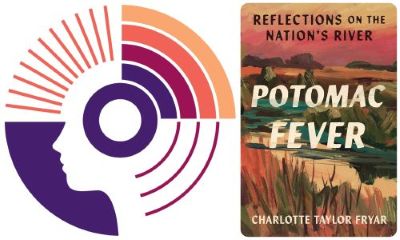
A book lives in your heart before it lives in your brain, and usually it lives there for a while longer before it makes its way onto the page. My book, Potomac Fever: Reflections on the Nation’s River, an essay collection and love letter to Washington, DC, and its waterways, was born on the street, walking around DC that first summer, before it ever made its way into my heart.
In between then and now, I left the city, I came back, I left again, and I returned again. I wrote the first notes of what would become Potomac Fever in 2017 and 2018 as daily journal entries that helped me jumpstart the task of writing my dissertation. I would wake early, take the dog for an hour-long walk along the Potomac, take some photos, and make notes in the Notes app. Then I would come home and type it up with little regard to punctuation in a messy Google Doc, before turning to what was, I thought, my other, real work. My students rarely believe me when I tell them I didn’t know that in those notes, I was writing a book.
It was on those early morning walks that I began to pay attention to the ways in which the ecology of the Potomac had been shaped by a history of pollution, deforestation, and development. Over time, I understood better how these factors, in turn, were directed by the persistent fact of anti-Black racism, which still dominates the ways in which DC is organized and operates. I could never again untie these two things — the astounding beauty of the ecological community along the river and the outrage of common American racism.
DC defines this paradox more than any other place I’ve lived. Or, maybe it’s that the longer I live here, the easier it becomes for me to identify it. Frederick Douglass, who will one day become the namesake of the 51st state, the Douglass Commonwealth, knew better than almost anyone the wonders, horrors, and potentialities of the District. Speaking to a crowd in Baltimore in 1877, he prophesied that, one day, though perhaps not soon, “Washington may not only become one of the most beautiful and attractive cities in the world, but one of the grandest agents in the work of spreading peace on earth and good will toward men.”
May it be so.
This past week, I took my Environmental Writing students to the Tidal Basin to discuss the ways in which DC is dealing with sea-level rise. After we circled the basin and talked through the construction efforts to build up sea walls to keep it from slipping back into the Potomac, we crossed Ohio Drive and walked to the edge of the river. The wind blew rough and strong, sending waves lapping against the concrete edge, which had been cracked into pieces by a thousand flood tides before.
As we turned to leave, I heard one of my students say to another, “It’s beautiful, even though it’s broken.” And though I don’t know exactly what he was talking about, I imagined he was speaking of our city.
[Editor’s note: This piece is in support of the Inner Loop‘s “Author’s Corner,” a monthly campaign that spotlights a DC-area writer and their recently published work from a small to medium-sized publisher. The Inner Loop connects talented local authors to lit lovers in the community through live readings, author interviews, featured book sales at Potter’s House, and through Eat.Drink.Read., a collaboration with restaurant partners Pie Shop, Shaw’s Tavern, and Reveler’s Hour to promote the author through special events and menu and takeout inserts.]
Charlotte Taylor Fryar is the author of Potomac Fever: Reflections on the Nation’s River (Bellevue Literary Press, 2025). Her essays, which have been twice nominated for a Pushcart Prize and recognized in The Best American Essays, can be found in Orion, Fourth Genre, Literary Hub, and the Southern Humanities Review, among other publications. Her writing has been supported by the Bread Loaf Writers’ Conference, Bread Loaf Environmental Writers’ Conference, and the Inner Loop, where she is a 2025 featured author. Charlotte holds a Ph.D. in American Studies from the University of North Carolina at Chapel Hill and lives just outside Washington, DC, less than 700 feet from the banks of the Potomac. She is the writer-in-residence at a boarding school in Northern Virginia and operates a small community herbal clinic.