Our Week in Reviews: 2/7/26
- February 7, 2026
A recap of the books we’ve spotlighted in the past few days.
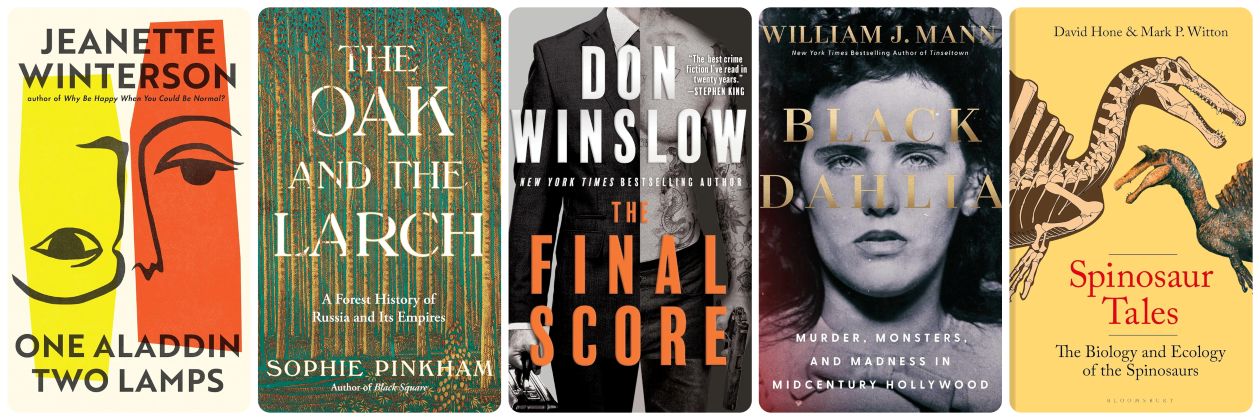
One Aladdin Two Lamps by Jeanette Winterson (Grove Press). Reviewed by Nicole Schrag. “Yet to say One Aladdin Two Lamps is about the power of storytelling risks underselling it. Winterson offers a beautiful, book-length reading of the Nights that delights in the absurd tales, recounting them in her own hilarious voice to examine how their themes of gender oppression, sudden turns in fortune, justice, mercy, and forgiveness resonate today. Partly, it focuses on the power of Shahrazad, the storyteller, whose tales manage to keep her alive, buying her another night before Sultan Shahryar will behead her as he has scores of other women before her.”
The Oak and the Larch: A Forest History of Russia and Its Empires by Sophie Pinkham (W.W. Norton & Company). Reviewed by Jonas Vaicikonis. “Her title sets up the big idea right away. The deciduous oak, which thrives in ‘European Russia,’ evokes more than a thousand years of connection to the rest of Europe and the West. The coniferous larch, which grows across Siberia, gestures toward Russia’s vastness and its ties to Asia. Pinkham uses this botanical contrast as a narrative compass. Instead of marching readers through a parade of battles, rulers, and dates, she invites us to wander with her through folktales, literature, and film toward a deeper sense of how the natural world shaped Russian identity across the landmass of Eurasia.”
The Final Score by Don Winslow (William Morrow). Reviewed by Art Taylor. “In many ways, ‘True Story’ — matching a tight scene time with a sprawling narrative — stands as the collection’s tour de force. Told entirely in dialogue, it ranges through anecdote after anecdote about small-time criminals and bigger ones, too, with a running joke about names as the stories interweave: ‘Lenny the Barber or Lenny No Socks?’ ‘Bobby Bats or Bobby Five Fishes?’ ‘Louie Cacciatore or Louie Doughnuts?’ Sharp little tales roll out one after the other, building the momentum of the larger plotline — about Lenny No Socks — toward a twisty finish.”
Black Dahlia: Murder, Monsters, and Madness in Midcentury Hollywood by William J. Mann (Simon & Schuster). Reviewed by Diane Kiesel. “All of this begs the question: Do we really need another book about the Dahlia? The answer is yes, so long as it’s Mann’s, which captures a defining moment in Los Angeles true-crime lore. His focus in Black Dahlia is less on the killer and more on Short’s final months, appreciating she was both a symbol and victim of her time. Mid-20th-century American men could sow wild oats with impunity, but women who dared to do the same paid a price. (See virtually any episode of ‘Mad Men.’)”
Spinosaur Tales: The Biology and Ecology of the Spinosaurs by David Hone and Mark P. Witton (Bloomsbury Sigma). Reviewed by Mariko Hewer. “In their introduction, Hone and Witton suggest that one of the reasons Spinosaurus and its relatives are so ‘keenly discussed’ is that they are ‘known from a dearth of material.’ Indeed, until recently, this dinosaur was represented only by the surviving description and drawings of its holotype (or specimen designated as the species name-bearer), which was destroyed during World War II. Bones and teeth that began to surface in the latter part of the 20th century have allowed for increased scrutiny and speculation about these enigmatic animals.”
Don’t miss another excellent book review, author interview, or feature! Subscribe to our free newsletter and follow us on Instagram, Facebook, Pinterest, Bluesky, and LinkedIn. Advertise with us here.