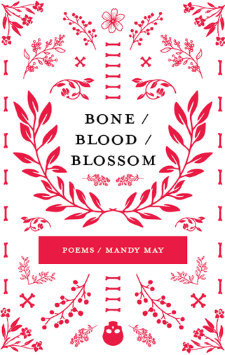
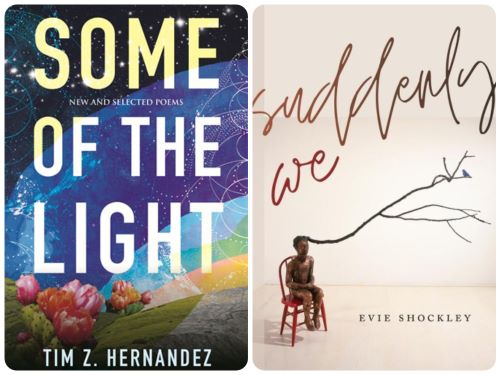
How the DMV helped forge my path as a “real” poet.
My literary life began at age 11, in 1983, with my first publication in Reston, Virginia’s newspaper of note, the Reston Connection. Imposter syndrome began then, too.
I’d forgotten all about the poem I’d written on a rainy day at summer camp spent indoors in an historic chapel on the very edge of a still-forested North Reston. The yellowed, antiqued poem was tucked away in my grandmother’s effects and found after she passed away in 2000.
Who was this young girl who thought so instinctively in line breaks? How did we end up leaping from a poem about rainbows (while bored counselors danced to Naked Eyes and Van Halen) to a public reading this April from my debut book of poems in New York City with the famous Rita Dove and a veritable coven of talented female poets I’d admired and learned from in my own time spent as an emerging poet?
The answer is Washington, DC. The District and its fertile subcultures formed the tributaries I needed to take me into a literary life I never anticipated. A lot of art and poetry in my youth formed holistically against the backdrop of the city’s myriad events: at a Positive Force venue in the form of zines and spoken-word, or while breaking down a Sunday DJ set spinning darkwave and ambient Goth music in Club Hell (while an open-mic host set up after the outro of a Dead Can Dance song floated away).
The early years of the behemoth music festival Lollapalooza, with spoken-word poets on the bill, saw me traveling to cities like Charles Town, West Virginia, so that I could stumble into the poetry tent out of a July rainstorm and into the spitting consonants of Magie Estep, an MTV-elevated star.
I moved into actively participating in poetry in the years that “W” came to the capital. My awareness shifted into the activist waves that created and performed Al-Mutanabbi Street Starts Here, Operation Ceasefire, and the mighty Split This Rock literary festival.
In the early 2000s, I took a series of creative-writing classes at Northern Virginia Community College with Southern poet Jenn Daniels. She had so much patience for my peripatetic personality — one foot in nightlife and activism, one foot in the classroom — and it was with her that my sense of craft set in. She actively helped me blossom as a writer, urging me onward to the Writer’s Center in Bethesda, Maryland, after I’d taken all the classes she could offer. Guidance and mentorship gave me a conceivable path amid the murky waters of Washington’s lit world.
Would literary DC accept a thirtysomething woman not far removed from her sticky-fingered years of charging a neon-red mohawk? I thought not as I walked down the steps into the Dickinson Room of a circa-2009, yet-to-be refurbished Writer’s Center. I’d signed up for a class on form in poetry that promised to generate everything from Anglo-Saxon riddle poems up through free verse.
If I’d met a sonnet in a dark alley back then, I might’ve punched it. Form was for poets carried in bookstores; imposter syndrome had me so close to dropping that class taught by award-winning poet David Keplinger. Other writers in the class were also of a non-traditional age, and they convinced me to stay. I wrote my fingers off through riddles, ballads, odes, and pantoums. Reader, I still write with David whenever I can, and he blurbed my first book.
There is prestige — and MFAs — in DC publishing if you want to find it, but I hope to stay as restless as my DIY writing roots. An old friend I call “Riot Grrl Cate” has invited me to join her at a Trap Poetry night held near her house in the Atlas District. The fact that poetry can bind together all stages of my life is a beautiful gift — a growing tapestry of text and place.
[Editor’s note: This piece is in support of the Inner Loop’s “Author’s Corner,” a monthly campaign that spotlights a DC-area writer and their recently published work from a small to medium-sized publisher. The Inner Loop connects talented local authors to lit lovers in the community through live readings, author interviews, featured book sales at Potter’s House, and through Eat.Drink.Read., a collaboration with restaurant partners Pie Shop, Shaw’s Tavern, and Reveler’s Hour to promote the author through special events and menu and takeout inserts.]
Majda Gama is the award-winning author of In the House of Modern Upbringing for Girls (Wandering Aengus Press) and The Call of Paradise (Two Sylvias Press). Her poetry has been honored with the Graybeal-Gowen Prize from Shenandoah and the Gregory Djanikian Scholars award from the Adroit Journal.