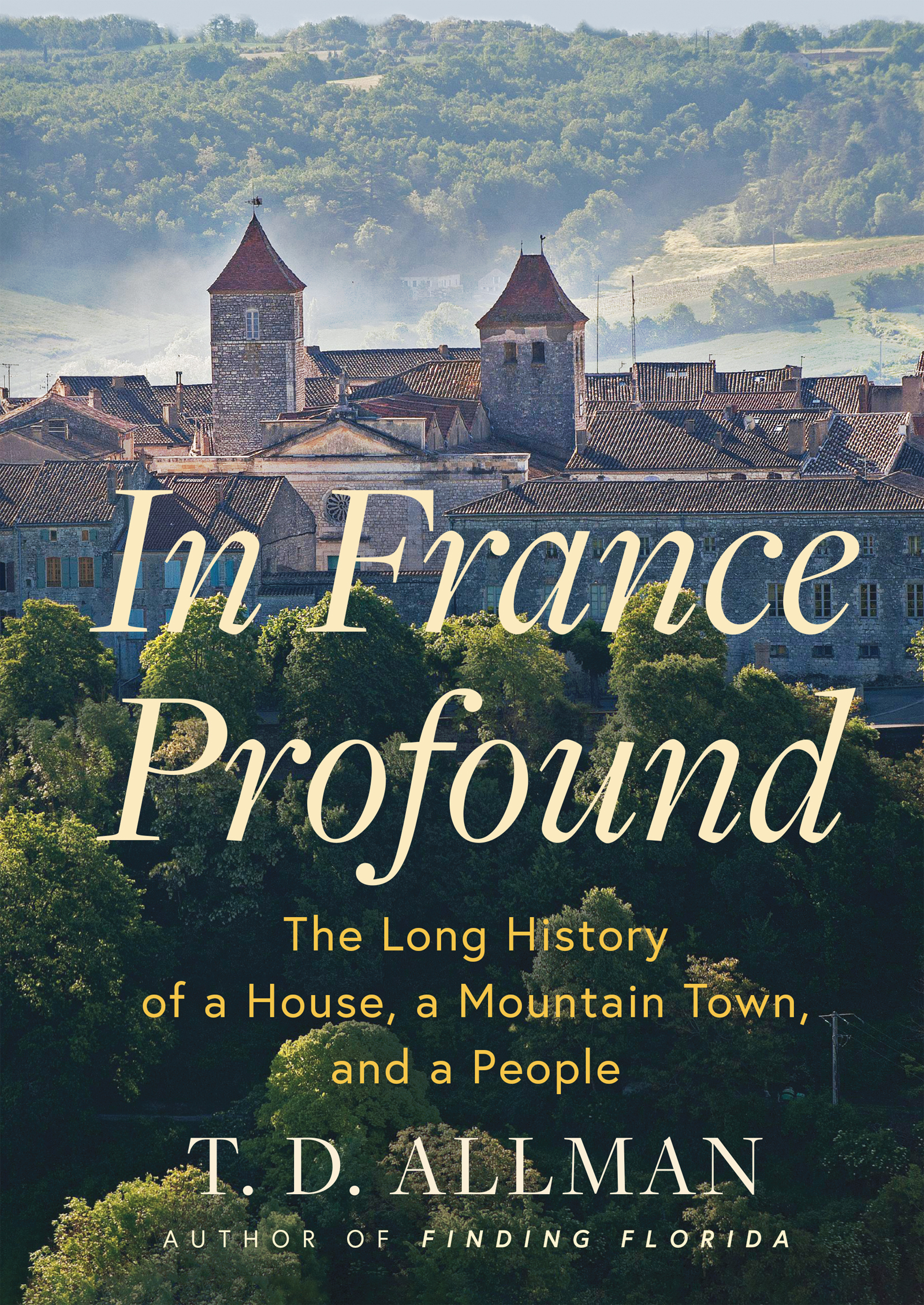
American Trickster: The Hidden Lives of Carlos Castaneda
- By Ru Marshall
- OR Books
- 668 pp.
- Reviewed by Franklin Freeman
- July 31, 2026
The 1970s hustler claimed he’d been sent by a shaman.
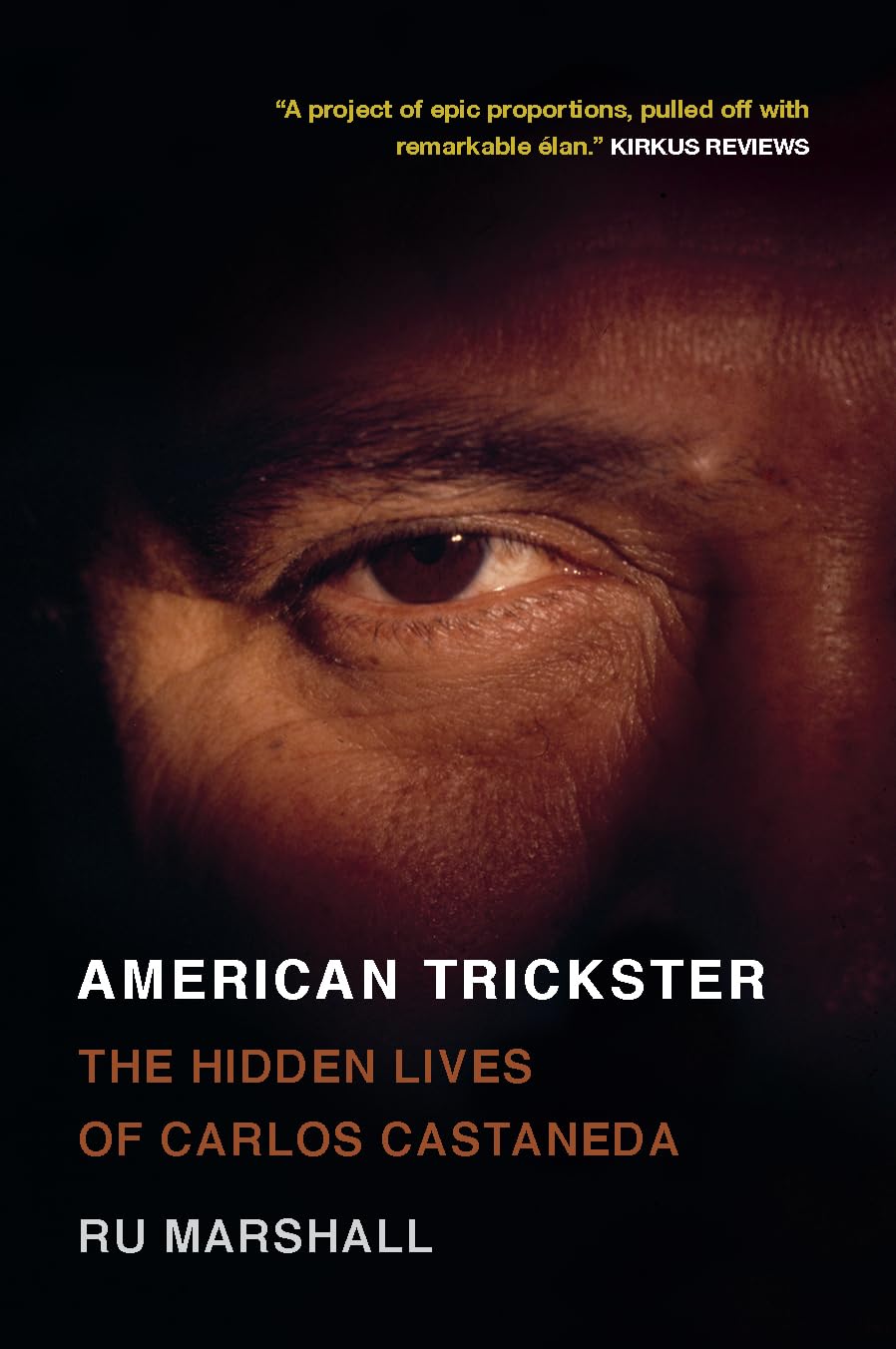
By all accounts, Carlos Castaneda, author of 11 books — most famously, the trilogy The Teachings of Don Juan, A Separate Reality, and Journey to Ixtlan — was a charming, self-deprecating man. A lot of fun to be with, irresistible to women. The only problem, says writer and visual artist Ru Marshall in their massive but well-worth-reading biography, American Trickster, is that Castaneda was an inveterate liar. (Marshall, who is nonbinary, titled their own novel A Separate Reality.)
Castaneda’s supposedly nonfiction books — chronicling his encounters with a Mexican shaman who allegedly taught Castaneda his mystical ways — were all fantasy novels, plagiarism his favorite tool. “His skill as a liar,” Marshall writes, “was inseparable from his philosophy, his charm, his art. It was also indivisible from his gifts as an entertainer. It was woven in with his jokes, his infectious sense of adventure, the feeling of ‘magic’ those who knew him almost always mention.”
Castaneda was born on Christmas Day in 1925 — not 1935, as he always claimed — in Cajamarca, Peru, as César Carlos Salvador Arana. In English, explains Marshall, arana means “a trick, a swindle, a lie.” Surrounded by women in his childhood (his father was distant and likely had suffered a nervous breakdown) and raised in a culture that believed in various forms of magic, Castaneda learned to live by his storytelling wits. He also devoured as many English books and movies as possible.
When he could, he left for the big city, Lima. There, he studied art but was never really good at it. His artistic circle imbibed existentialism and Nietzsche. Combined with the ghost stories he “learned and told in Cajamarca,” Marshall says, these ideas became Castaneda’s philosophy.
His time in Lima, which came to a head when his mother died and he left Peru for North America, led to what Castaneda confessed to as “my nihilism.” Writes Marshall, “He’d begun in the wake of his mother’s death, to test his capacity to intentionally violate ethical norms.” He did this by, among other things, seducing and abandoning a pregnant young woman, his actual first wife; telling a friend, who’d walked across Bolivia because of it, that he would meet him in Brazil and then never showing up; and becoming a con artist on the streets of Lima.
The rest of the story grows inexorably, and darkly, from there. Castaneda settled in Los Angeles, attended UCLA to study anthropology, and lied to everyone about his past even as he charmed and flattered them. Slowly, patiently, like a spider (as Marshall puts it) and fed by the growing popularity of his books, Castaneda wove his web of deception into an extensive and lucrative cult.
He also fooled prominent UCLA professors, the most significant one being Harold Garfinkel, founder of ethnomethodology. Duped, too, were the reviewers of his books; once the rave-review ball got rolling, it seemed, nobody wanted to be the one to stop it. The New York Times was a prime offender. One anthropologist wrote a scathing takedown of Castaneda’s work for the newspaper, but the Times pulled it in favor of a more positive critique.
TIME magazine, however, ran an exposé about Castaneda. And, burned previously by conman L. Ron Hubbard, research psychologist Richard DeMille (Cecil B.’s nephew and adopted son) wrote two books — Castaneda’s Journey: The Power and the Allegory and The Don Juan Papers: Further Castaneda Controversies — proving that Castaneda was a fake and a serial plagiarist.
Nevertheless, Castaneda was able to surround himself with mainly female followers, especially his “Four Winds,” four women also variously called witches and “Chacmools.” Relatively famous followers included Amy Wallace — co-author of The Book of Lists and author of a memoir about Castaneda, Sorcerer’s Apprentice: My Life with Carlos Castaneda — and novelist/screenwriter Bruce Wagner. Also taken in to varying degrees by the charade were editor Michael Korda, director George Lucas, and poet Octavio Paz.
Marshall — who recently wrote a piece on the parallels between Castaneda’s movement and MAGA — details how Castaneda built his cult by employing the same practices used by other ones: Love-bomb someone emotionally vulnerable, usually from a divorce or a death; give them a sense of belonging; cut them off from family and friends; and then subject them to ego-demolition, followed by more love, until they’re utterly dependent on the cult. (And, of course, on its leader, who’s usually a man. But not always.)
Among his other teachings, Castaneda maintained that one did not have to die but could, instead, be taken up in a ball of light into the ultimate reality. So, when liver cancer ravaged him, the web undulated wildly. Screenwriter Wagner reportedly said the circus had left town. When Castaneda died, the Four Winds blew away, though the bones of one of them were found by hikers in Death Valley.
To write American Trickster, Marshall visited Cajamarca twice, interviewed hundreds of people, and referenced countless books and articles. Their writing style, with its plethora of colons and sentence fragments, sometimes irritated me, and one gets bogged down in details of phenomenology and the ever-shifting names of cult members. (Castaneda was always changing his followers’ names, as well as the meanings of words, so this part can’t be helped.) But the book as a whole overwhelms and provokes in a good way.
Marshall’s reflective last chapter serves as a warning about our human need to belong to a tribe — and the political ramifications thereof — and about how the internet facilitates the splintering of reality. Their book is also a cautionary tale about (and testament to) the nature of truth and love.
Franklin Freeman, originally from Texas, writes poetry and book reviews from Saco, Maine, where he writes in the mornings to stay sane and works in a small family business in the afternoons to keep eating.