Baldwin: A Love Story
- By Nicholas Boggs
- Farrar, Straus and Giroux
- 720 pp.
- Reviewed by Kitty Kelley
- August 11, 2025
This superb biography is more than worthy of its larger-than-life subject.
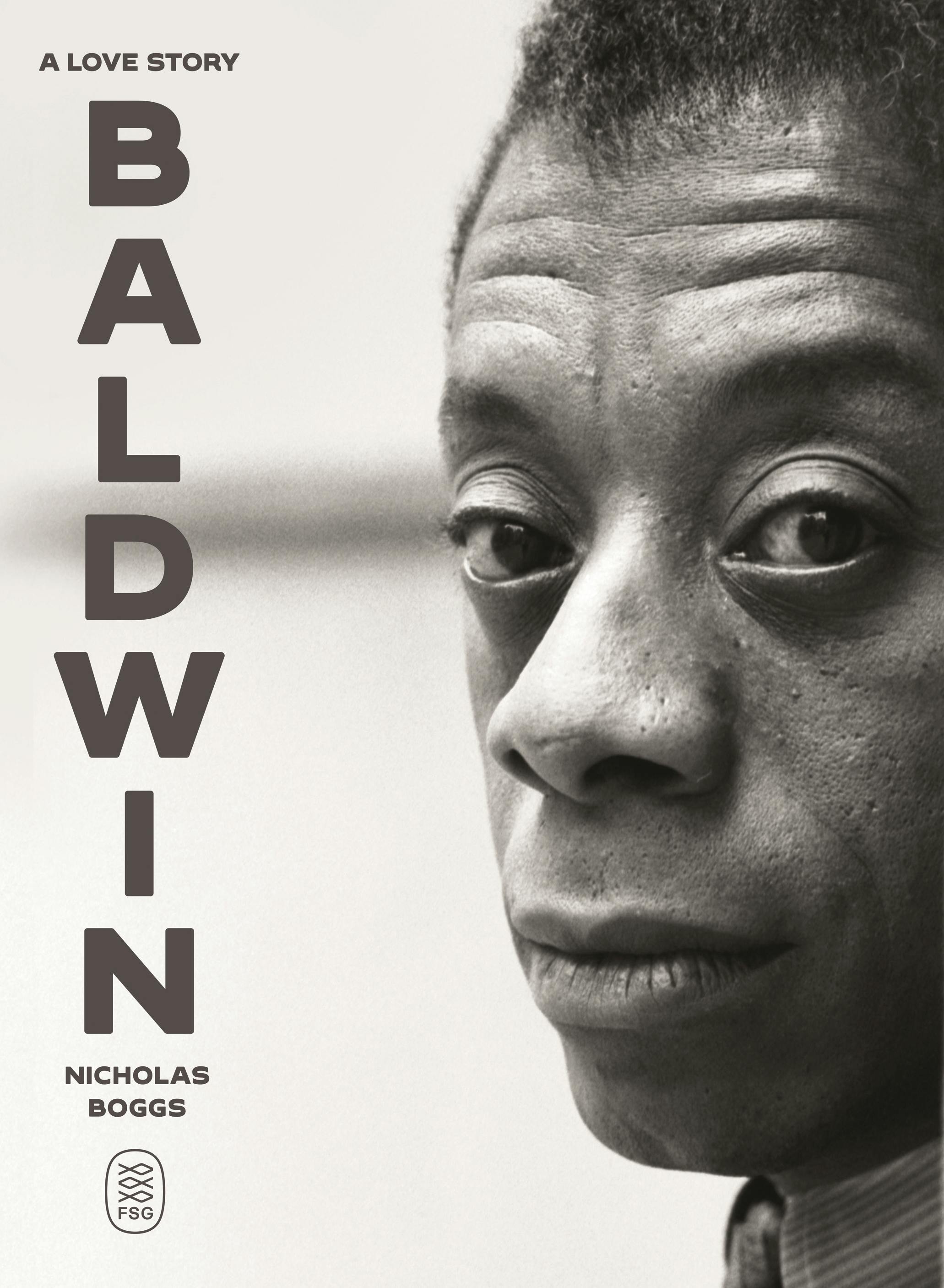
By the time James Baldwin was 5 years old and growing up in Harlem, he’d read all the way through the only book in his house — the Bible — and so began his love affair with words. That romance led to his dream of becoming a writer, and he became one of America’s greatest, leaving a legacy of six novels, seven essay collections, one short-story collection, two plays, and one screenplay. He also left behind an indelible presence on television, where he debated William F. Buckley Jr. on politics, instructed Dick Cavett on the Black community, and told David Frost that he had to flee the U.S. “to become a human being.”
Born in 1924, Baldwin never knew who his father was, and his stepfather, a brutal, God-obsessed man, despised white people as much as he detested his effeminate stepson, the oldest of nine children. By the time Baldwin reached adolescence, he felt clobbered:
“I can conceive of no Negro native in this country who has not by the age of puberty, been irreparably scarred by the conflict of his life.”
Being poor, Black, and gay, “Jimmy,” as his family called him, felt imperiled in a rich, white, heterosexual nation where sodomy was a crime and poverty a certainty. At the age of 24, he fled the U.S. and, without knowing a word of French, moved to Paris with barely $40 in his pocket. He spent his first Christmas week in jail for receiving stolen goods, but after a few hand-to-mouth years, two suicide attempts, many lovers, and innumerable nights drinking at the Café de Flore on Boulevard Saint-Germain, Baldwin flourished as a writer. His best-known novel, Go Tell It on the Mountain, published in 1953, was the semi-autobiographical story of a young Black man who faced a lifetime of rejection.
The relative freedom Baldwin felt in Europe could never be found in America, where Senator Joe McCarthy thundered about a “Lavender Scare,” the U.S. Senate issued an official report (S. Res. 280) on the “employment of homosexuals and other sex perverts in government,” and President Dwight D. Eisenhower signed an executive order barring homosexuals from federal jobs. A decade later, President Lyndon B. Johnson’s personal aide, Walter Jenkins, was arrested in a YMCA restroom for soliciting sex and was forced to resign his White House position.
In those years, Baldwin returned to the States to see his family, and in 1963, he traveled the South on a lecture tour, speaking about civil rights. He became such an effective spokesman for the movement that he was featured on the cover of Time, which wrote, “There is not another writer, black or white, who expresses such poignancy and abrasiveness about the dark realities of the racial ferment in North and South.” Baldwin died in France in 1987 from stomach cancer. He was 63 years old.
Now comes an eloquent celebration of his centenary in Nicholas Boggs’ spellbinding Baldwin: A Love Story. This mammoth tribute celebrates the artist’s life — personal and professional — by dividing it into four parts, each led by the first name of the man beloved by Baldwin at the time: “Beauford: The Greenwich Village Years, 1940-1948”; “Lucien: The Paris Years, 1948-1955”; “Engin: The Transatlantic Years, 1957-1970”; and “Yoran: The Saint Paul-de-Vence Years, 1971-1976.” It’s a life story that is at once erotic and erudite.
Boggs, every bit the equal of James Boswell, whose 1791 biography of Samuel Johnson set the standard for excellence, received his B.A. from Yale and his Ph.D. from Columbia. In 2018, he co-edited a new edition of Baldwin’s Little Man, Little Man: A Story of Childhood, and since then, he’s contributed scholarly tracts to several books on his subject, including The Cambridge Companion to James Baldwin; James Baldwin Now; James Baldwin Review; and Speculative Light: The Arts of Beauford Delaney and James Baldwin.
Having mastered his subject, Boggs movingly presents Baldwin as the avatar of Black queer literary history and breathes new life into the genre with a volume that will enrich scholarship for the LGBTQ+ community. As John F. Kennedy said, “In serving his vision of the truth, the artist best serves his nation,” and Nicholas Boggs serves all of us with his love story of James Baldwin.
Kitty Kelley is the author of seven number-one New York Times bestseller biographies, including Nancy Reagan, Jackie Oh!, and Elizabeth Taylor: The Last Star. She is on the board of the Independent and is a recipient of the PEN Oakland/Gary Webb Anti-Censorship Award. In 2023, she was honored with the Biographers International Organization’s BIO Award, which is given annually to a writer who has made major contributions to the advancement of the art and craft of biography.