Berlin Shuffle: A Novel
- By Ulrich Alexander Boschwitz; translated by Philip Boehm
- Metropolitan Books
- 256 pp.
- Reviewed by Lawrence De Maria
- January 13, 2026
A searing portrait of post-Weimar Germany’s utter squalor.
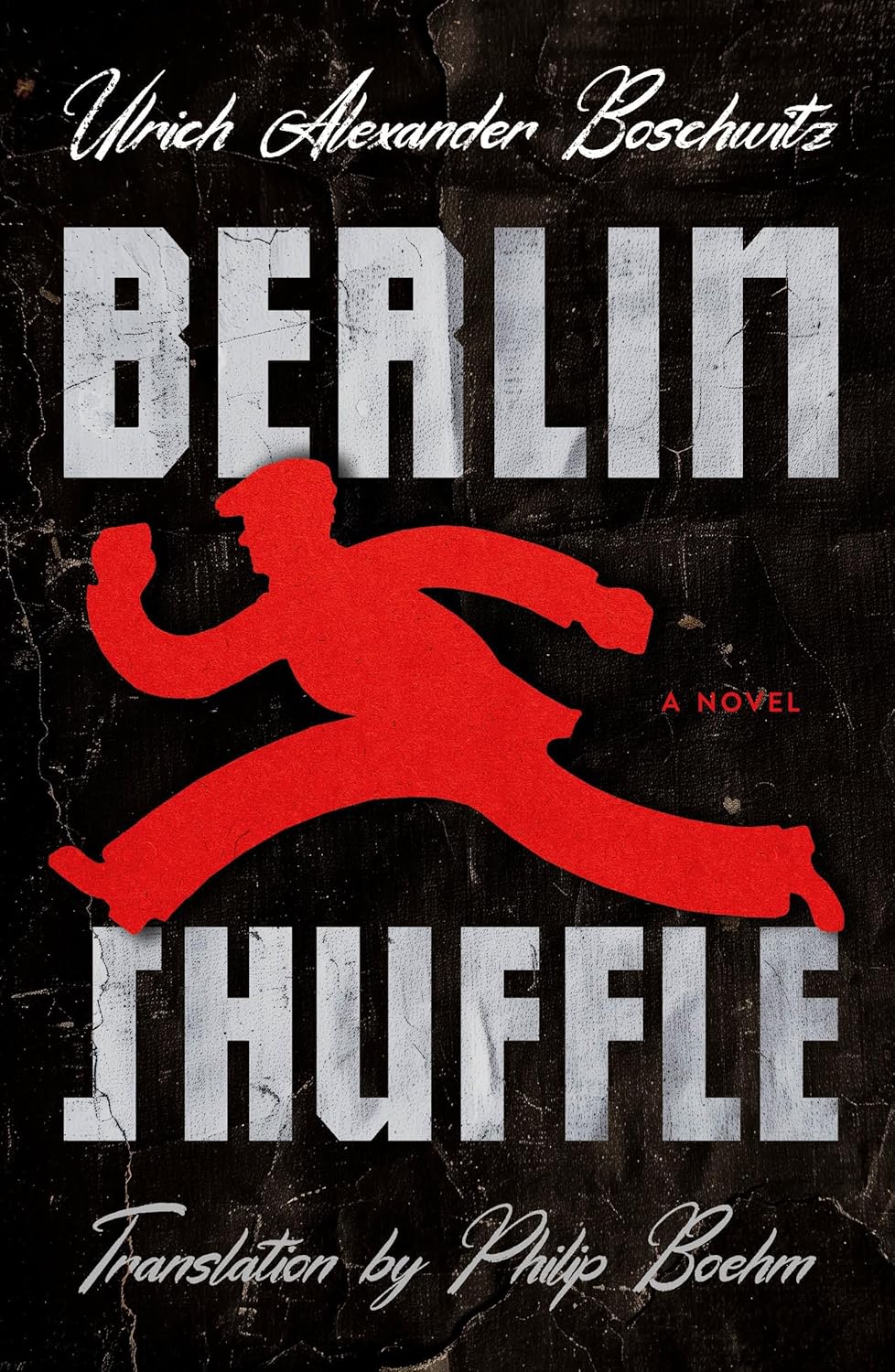
The writing in Berlin Shuffle is superb. Author Ulrich Alexander Boschwitz (1915-1942) was a master of period detail and personality. But I can’t remember ever being so depressed after reading a novel.
This book was recently discovered and has been translated (brilliantly, by Philip Boehm) into English, but it’s clear in any language that Berlin in the 1920s was a terrible place to be if you didn’t have a steady income.
I must admit to being a little suspicious about “recently discovered” books by German authors. (Remember the “Hitler Diaries” hoax?) But Boschwitz was a very young but very respected writer on the run from the Nazis (and thus, eventually, very dead). Berlin Shuffle was his first novel.
In it, he writes about a post-Great War Berlin where wounded veterans, beggars, and prostitutes roamed the streets in abject poverty, often sleeping three to a dank, dirty basement room in conditions that were nothing short of soul-destroying. The only haven for these misfits was the Jolly Huntsman pub, which allowed them to maintain a semblance of dignity via drink and dance.
I know a little about what happened in Germany following its defeat in World War I. Things gradually improved under the Weimar Republic, at least until the global economic calamity of 1929 and the subsequent rise of the Third Reich.
Boschwitz, the author, must have seen where things were headed and used this novel to expose his country’s wretchedness. Boschwitz, the half-Jew, must’ve also seen that the Nazis were coming for him — they’d already murdered his uncle — because he fled Germany for Norway in 1935.
By the time World War II broke out, Boschwitz was living in England, where, despite having a valid reason for escaping the Nazis, he was interned as an enemy alien and deported to Australia. When the British authorities finally came to their senses, he was sent back to England, only to be killed en route when his ship was torpedoed by a German U-boat. He died at 27.
His second novel, The Passenger, was published while he was living in Norway. It was rediscovered in 2021 and released to wide acclaim. Berlin Shuffle was written in 1937, and in it, Boschwitz re-creates the squalor of Berlin so fully that readers can almost taste it. The world lost a great wordsmith — along with the new manuscript he was working on — to that torpedo.
The people who populate this novel — including Max Sonnenberg, blinded during WWI; Fundholz the beggar; Tönnchen, slow of mind and unable to stop eating; Minchen Linder, a mistress to older men; Winter, Linder’s boyfriend and a petty criminal; and Grissmann, who is unemployed and desires Sonnenberg’s wife — are all flawed, to say the least.
They are thus very difficult to like. Yet their grit and determination to survive in a world rapidly going to pieces makes Berlin Shuffle a moving read. Knowing what befell its author makes it a heartbreaking one.
Since 2005, Lawrence De Maria has written 40 thrillers and mysteries on Amazon.