Two motherless girls build family beyond the bonds of blood.
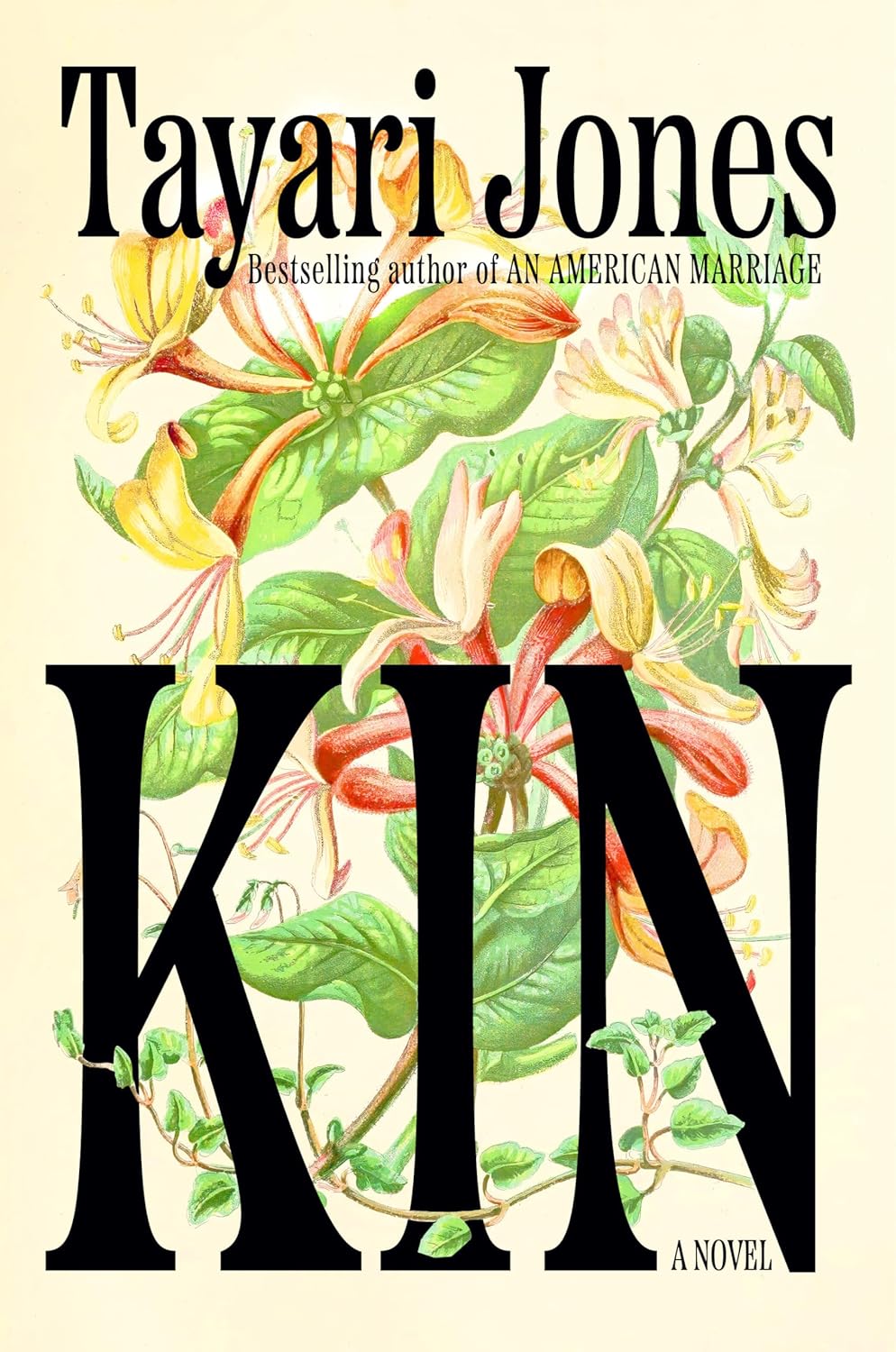
It’s 1941 in Honeysuckle, Louisiana, and two infants share a circumstance that will define them and their friendship for life: motherlessness. After Vernice’s father kills her mother and himself, leaving the baby orphaned, her aunt Irene leaves her own childfree and carefree life in Ohio and moves to Honeysuckle to raise the girl. Meanwhile, days after young Hattie Lee gives birth to a daughter, Annie, out of wedlock, she hands her off to her mother and runs away from it all. Thus, Annie and Vernice (aka Niecy) grow up together as “cradle friends,” both haunted by the absence of mothers they never knew, and under the care of women who never intended to take on such a task.
Fast-forward to the 1950s, when the girls are finishing high school and contemplating the next stage of their lives. Intelligent and dutiful Niecy is destined for Spelman, whereas the more impulsive Annie just wants to start working and earn enough money to go to Memphis to find her mother and bring her home. In alternating first-person chapters, we follow each girl on her journey, where nothing goes according to plan.
Annie thinks she’s running off with her boyfriend, Clyde, until he shows up in their getaway car with another woman, Babydoll, at his side and his cousin Bobo along for the ride like an unwanted consolation prize. Their struggling car eventually breaks down, stranding them at a compound that looks like an abandoned farm but is actually a whorehouse. The madam, Lulabelle, agrees to let them work off their room, board, and costs of car repair, but as with the sharecropping arrangements that trapped their ancestors, their departure date becomes more obscure each day.
Meanwhile, Niecy is hurt by the way Annie snuck off without saying goodbye. Annie had pleaded with Niecy to come with her, but Niecy was expected to go to college. After the church collection for her fees and clothes and suitcases, she has the hopes of the whole community boarding the bus to Spelman with her. But when she sits in the wrong row — this is the Jim Crow South — she becomes an unexpected freedom fighter and winds up getting kicked off the bus, her belongings heading to Atlanta without her.
And this is all in the first 80 pages.
Despite the heavy themes — murder/suicide, abandoned children, wage entrapment, racism — Tayari Jones’ Kin isn’t a heavy book. Her smooth prose and light touch direct our attention to the bond between the girls, for whom this is simply life. And although this is historical fiction, we’re immersed in the perspective of teens with their whole futures in front of them. The tone is fittingly hopeful and expansive — and often downright funny, as when Annie and her companions are debating what to do when they arrive at the whorehouse:
Clyde said, “Whoever is screwing in these shacks will walk away with an ass full of splinters.”
Babydoll puckered her lips like a kiss to the wind. “What these girls got must be so juicy, don’t nobody care.”
Bobo opened his leather bag and retrieved his hairbrush and worked on his head. “This is interesting.”
I fisted my hands on my hips. “I know what I am not about to do.”
Lulabelle, way on her front porch, had that same supernatural hearing as Granny because she threw her head back and laughed, flashing a front tooth trimmed in gold, like a picture frame.
“Don’t you worry. I don’t allow virgins to work at my place.”
My so-called friends joined her in the mocking, as they had all “tasted the fruits of the garden,” like people used to say.
Humor is a powerful strategy both in this book and, indeed, throughout Black history. It’s how people keep going despite the hardships they encounter.
As Annie narrows in on her search for Hattie Lee, she asks herself if she has the strength to confront the mother who never sought her out. Niecy navigates the new social mores and opportunities of Spelman, earning the nickname “Country Mouse” as she ventures into the wider world.
Eventually, Niecy and Annie reconnect, exchanging letters full of love and gossip and curiosity about each other’s lives. The letters are pitch-perfect, capturing the energy and naïveté of youth, even as the young women enter adult life. Anyone who has reread troves of letters from their high school or college days will likely recognize the eagerness and wonder Jones recreates here:
Dear Niecy,
Friend, start from the beginning! You have not one boyfriend, but TWO? Like 1 plus 1? Like you have one man and another one? When I read your letter, I almost choked on the pralines that Granny sent me. (I should ask her to send you some too.) You got sent to an all-girls school and found yourself more men than you know what to do with. When you went there, did you know that MOREHOUSE COLLEGE WAS RIGHT ACROSS THE STREET? I know your aunt is free-minded, but Granny would be UPSET if she sent me to what she thought was a convent, but it turned out to be a juke joint with books...
Yes, this is history, but real flesh-and-blood girls are experiencing it. They live through and debate things like the Civil Rights Movement, colorism and passing, sexuality and the controversy of queerness, and marriage and pregnancy in a personal, practical manner rather than some grand, distant, sepia-toned perspective.
Not all of it is humorous, but even when things get heavy, a sense of comfort pervades because of the strength of the relationships Annie and Niecy have cultivated between themselves and the other people in their lives. Family is more than blood in Kin, and it’s stronger than all the pain and heartbreak life serves up. Ultimately, Jones has served up an enjoyable and engrossing novel with love at its core.
Tara Campbell is a writer, teacher, Kimbilio Fellow, and fiction co-editor at Barrelhouse Magazine. She teaches flash fiction and speculative fiction and is the author of two novels — including, most recently, City of Dancing Gargoyles — two hybrid collections of poetry and prose, and two short-story collections.