Playing Wolf: A Novel
- By Zuzana Říhová; translated by Alex Zucker
- Catapult
- 288 pp.
- Reviewed by Mariko Hewer
- November 26, 2025
Folklore and horror mingle in this deliciously grim debut.
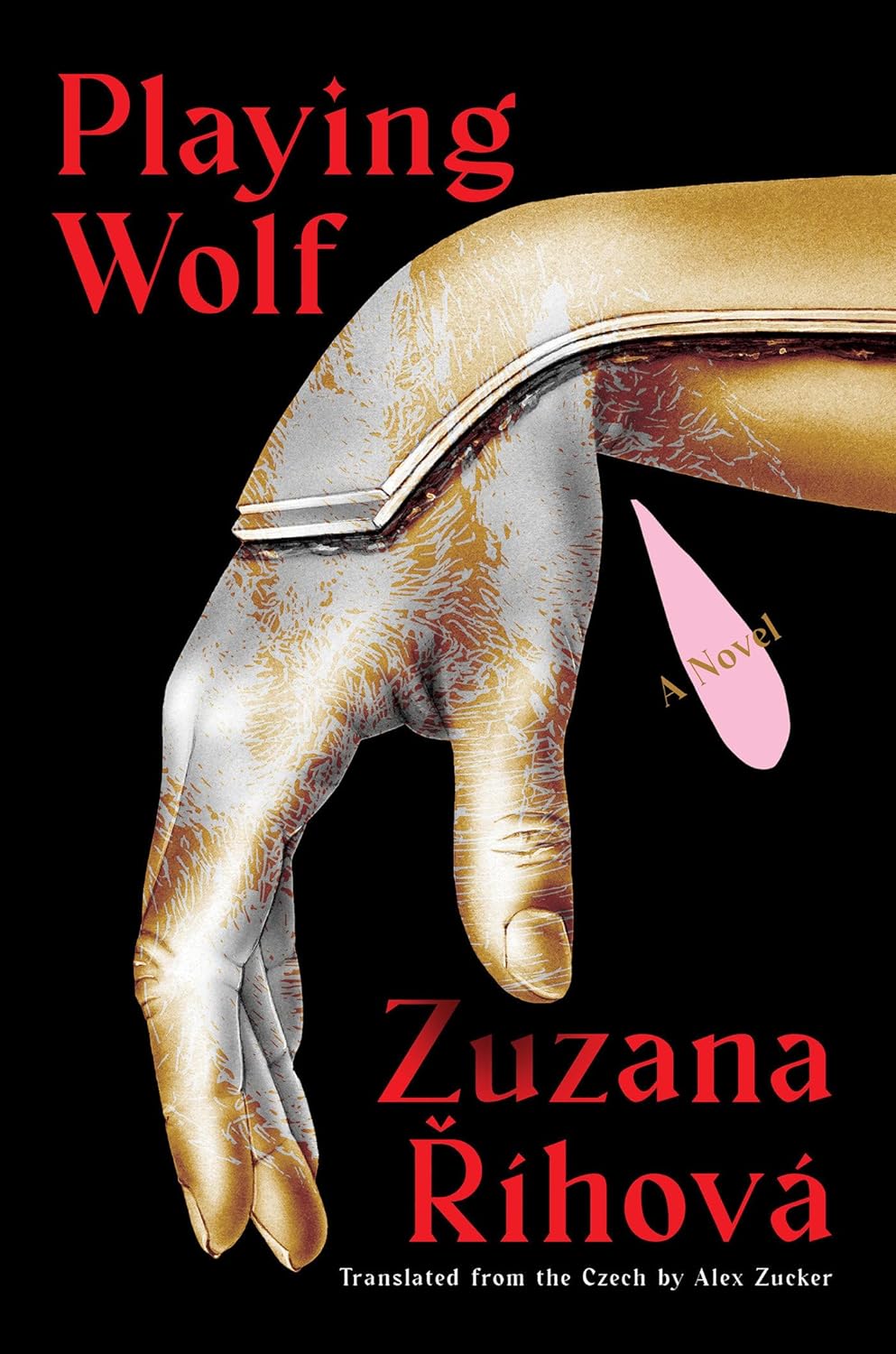
It’s a well-known trope in scary movies and books that, finding ourselves in unfamiliar surroundings, we begin by fearing the forest outside but end up terrified of the monster within. The tale of Little Red Riding Hood embodies this dread: As Grandmother is revealed instead to be the Big, Bad Wolf in disguise, the girl’s sense of safety is forever altered. In her debut novel, Playing Wolf, Zuzana Říhová combines a fairytale with horror in a satisfyingly seamless narrative that only occasionally becomes too abstract to follow.
Bohumil and Bohumila have moved from Prague to the small village of Podlesí in hopes of making a new start with their unnamed son. Bohumila’s hand is wounded in some manner and won’t heal properly:
“Her hand twitched from the heat. She could feel the cigarette smoke seeping under the bandages, tickling and itching between the stitches. Her swollen hand was practically smoked with pub fumes, just peel off a piece and dip it in mustard and horseradish.”
Early on, Říhová establishes her ability to delightfully disgust readers. After their son disappears, Bohumil contemplates the depth of his wife’s anger toward the child:
“When had that wasps’ nest of hatred taken shape inside her eyes? Did it only appear now, or had it been there all along, growing and buzzing since back in the days when he still regarded her with trust and affection as she made dinner, stacked building blocks, fed the baby?”
The paramount fear, as in Little Red Riding Hood, is that someone considered a safe haven might, in fact, be capable of — or even inclined toward — murder.
As the couple’s search for their son spirals laconically toward (but not into) the woods bordering the town, they confront a haunting question: Would they be better off without their child, whose special needs have taken a toll on them? Writes Říhová:
“Regret lashes [Bohumil’s] back with watery straps. Thick welts form on his skin that sting when he sits, stands, lies down. His strength is giving out, he doesn’t know what to do. It frightens him that he thought for a while that the boy was gone. That that small sigh of relief that stole into his mouth might have finished off the boy, done him in. I never should have wished for my child not to exist, not even for a moment. But I did.”
Eventually, the townspeople seem to take pity on the strange family and offer to help search for the boy. But now, a new phase of the nightmare unfurls as Podlesí’s residents, having never fully warmed to the newcomers, begin to behave in strange, subtly alarming ways:
“Jarda wrapped his arm around her elbow…He gave her a gentle pat on the back and smiled kindly. Bohumila knew by now that not all wolves are exactly the same: Some are perfectly charming, not loud, brutal, or angry, but tame, pleasant, and gentle. Once more she turned to look back, slowing her pace a bit. Once more she hesitated. She didn’t want to go into the woods.”
Říhová’s writing is strongest when she zooms in on the mundane terrors of her story and falters only when she becomes too abstruse. Part I ends with a moment of discovery (the boy is missing), and part II begins two days later. Although flashbacks provide insight into what happened during those days, the emotional punch might’ve been more powerful had we been plunged straight into that aftermath.
Similarly, there are instants in the forest where the unease is diluted by confusion over what’s actually happening — although this may be part of the author’s strategy. No matter. Full of slow-moving trepidation interspersed with moments of acute panic, Playing Wolf is worthy of a spot on any horror fan’s bookshelf.
Mariko Hewer is a freelance editor and writer as well as a nursery-school teacher. She is passionate about good books, good food, and good company.