This Dark Night: Emily Brontë, A Life
- By Deborah Lutz
- W.W. Norton & Company
- 352 pp.
- Reviewed by Stuart Kay
- May 21, 2026
The novelist’s work was as brooding as her surroundings.
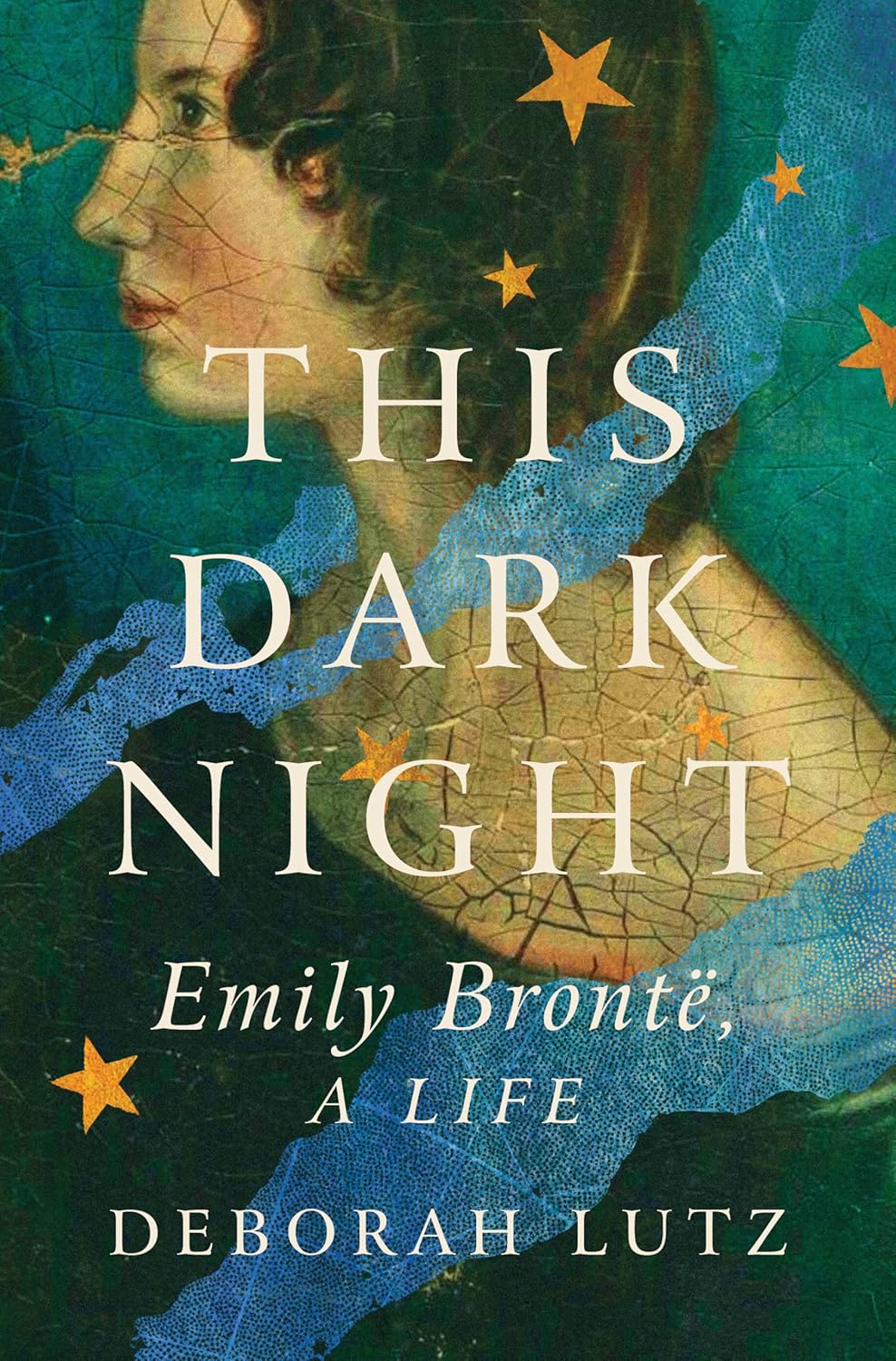
Ted Hughes memorably labeled Charlotte, Emily, and Anne Brontë the “three weird sisters,” and Emily has typically been seen as the weirdest of the three. Gauche, aloof, and dowdy, she channeled her energies into creating intense, brooding poetry and a famously sui generis novel, Wuthering Heights, seething with storms and otherworldly passion.
The loss of almost all of Emily’s papers — thousands of pages of prose and poetry and all but three of her letters — no doubt partially explains the customary view of her as elusive and mysterious. In This Dark Night, Deborah Lutz, the George and Barbara Kelly Professor in Nineteenth-Century English and American Literature at Penn State, has attempted to reconstruct Emily’s life using a wealth of primary and secondary sources, including weather reports, the diaries of Emily’s neighbors, and local newspapers, as well as Brontë manuscripts that had been missing for over 100 years.
The result is a judicious and accessible biography that interweaves Emily’s quotidian routines and trials in a parsonage on the edge of bleak Yorkshire moorland with an imaginative and creative life that would culminate in the dark drama of Heathcliff and Cathy.
Emily’s personal life was plainly filled with tragedy. Three years after her birth in Thornton, Yorkshire, in 1818, her mother, Maria, died, leaving the six Brontë siblings — Emily was the second youngest — in the care of their father, Patrick, and Maria’s sister, Elizabeth. Significantly, in Wuthering Heights, no fewer than 10 parents leave behind young children when they die. Emily’s elder sisters Maria and Elizabeth died at the ages of 11 and 10, respectively. Her brother, Branwell, died at 31, probably as a result of tuberculosis and overindulgence in alcohol and opium, just a few months before Emily’s death from tuberculosis at the age of 30.
Patrick was a curate who hailed from a poor Irish family. His father’s surname was Ó Pronntaigh — anglicized, it would be Prunty, Brunty, Branty, or perhaps Bruntee. Patrick alternately spelled his surname Brontè, Bronté, Brontê, and Brontē. As Lutz says, playing with names was a family obsession. Emily, who was the only one of the Brontë sisters with a middle name, saw herself as Emily Jane as a reminder of the many Janes on her mother’s side.
The family had moved to Haworth from Thornton in 1820, and Emily would live there nearly all her life. She had only around a year of formal schooling. Patrick taught her at home, and she read avidly — everything from Aesop’s Fables and Virgil to Walter Scott, Dickens, and probably French novels that, as Lutz says, were thought to be “perverse, ‘unspeakably foul,’ and even dangerous.” Roaming the windswept moors, reading, and writing were her treasured means of escape from household chores.
The young siblings began to write stories after Patrick gave Branwell a box of 12 wooden soldiers. The soldiers inspired the imaginary worlds of Glass Town and Angria. At the age of 12 or 13, Emily began to create the fantasyland of Gondal with her sister Anne, who was her best friend. Gondal would become an enduring obsession.
Emily spent three months at Roe Head School in Mirfield, around 20 miles from Haworth, when she was 17. Lutz confirms that Emily didn’t thrive in exile. Forced to follow a strict routine for 12 hours a day, she felt penned in, and she didn’t make friends easily. She eventually fell ill and left for home. According to Charlotte, “Emily loved the moors...Liberty was the breath of Emily’s nostrils; without it she perished.”
In 1838-39, Emily spent a short spell as an instructor at a girls’ school; in 1842, she accompanied Charlotte to Brussels to study at a boarding school. A student in Brussels who would become Charlotte’s lifelong friend said of Emily, “I simply disliked her from the first, her tallish, ungainly, ill-dressed figure contrasting so strongly with Charlotte’s small, neat, trim person.” On learning of the death of her aunt Elizabeth, Emily returned to Haworth with Charlotte. A later plan by the sisters to open a school at the parsonage failed to get off the ground.
Charlotte, Emily, and Anne would go on to publish a volume of poems at their own expense using the pseudonyms Currer, Ellis, and Acton Bell. Only two copies were sold in the space of a year. Undaunted, Charlotte announced to the sisters’ publisher that they were preparing three novels for publication: The Professor, Wuthering Heights, and Agnes Grey.
Emily took around two years to finish Wuthering Heights — the only novel she left us — which was rejected at least four times before it found a publisher. She had to pay to have it published and, as Lutz confirms, the reviews were on the whole unfavorable. It was thought coarse, strange, savage, and eccentric. Emily would die in the year after it was published.
The gaps in our knowledge of Emily’s life have fueled much speculation. Brontë scholars have been intrigued by the question of whether, in her 16th year, she had a romantic entanglement that led her father to suddenly decide to send her away to school. Conclusions have been drawn from her androgyny and boldness — a local described her as being “more like a man than a woman, and very dominant in will” — and from the male nickname (“The Major”) that she was given.
Such questions are left open here. Lutz resists making judgments on whether Emily was autistic, dyslexic, asexual, queer, transgender, anti-racist, a feminist, or an environmentalist on the basis that “these twentieth- and twenty-first-century ideas and identities don’t import easily into the past.”
Notwithstanding Charlotte’s verdict that Emily “had no worldly wisdom; her powers were unadapted to the practical business of life,” This Dark Night evidences her domesticity and anchors the account firmly in the everyday. Emily’s hours were filled with running the house — by sewing, baking, and cleaning — and she looked after the sisters’ finances, including their shares in the York and North Midland Railway Company. Her piano playing — she played with “precision and brilliancy” — and her love of animals provided release.
Emily also learned how to shoot from her father, who, following an attack on a cloth mill by around 100 Luddites, had the habit of keeping a gun by him and discharging it out of the window each morning. She was unfashionable and extremely reserved, and she didn’t suffer fools gladly. She was, as Charlotte suggested, “a solitude-loving raven, no gentle dove.”
Emily’s world is hauntingly rendered in This Dark Night. Wuthering weather (“wuthering” means characterized by strong winds) never left Haworth and the moors for long, and the average age of death in the area was 19 by some measures. The local church accommodated two or three funerals a week, so the sight of mourners and of graves being dug would have been familiar to the Brontë siblings. In the autumn, following the ancient English tradition of the bone fire (Lutz points to the likely origin of the word “bonfire” in the term), old bones that had been removed from graves to make way for the newly dead were burned. Small wonder Emily was much possessed by death and inclement weather.
Stuart Kay is a freelance writer based in Edinburgh, Scotland. He is a former reporter and sub-editor for the Scottish Parliament’s Official Report.